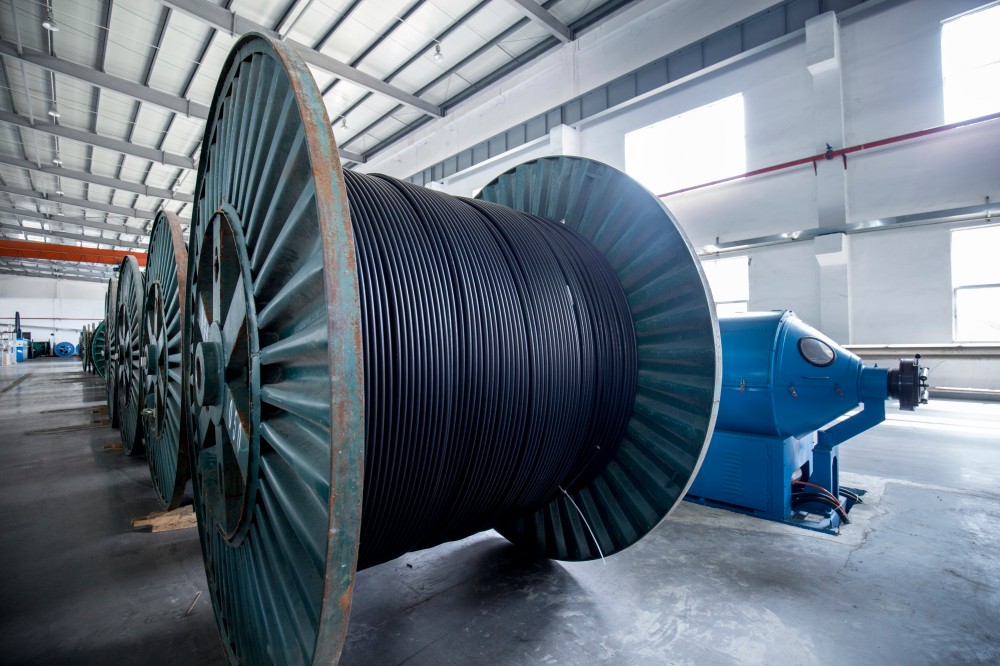
In many information transmission processes, transmission essentially relies on the conductors inside industrial control cables. The anti-interference function of industrial control cables provides relatively strong resistance to interference, especially for critical information, offering excellent protection. The realization of these functions is often inseparable from the structure of the industrial control cable. So, what aspects of the structure and appearance of substandard industrial control cables are included?
Industrial Control Cable Sheath
The thickness is too thin, either less than the minimum standard value or the average thickness is less than the allowable tolerance. Insulation layer thickness issues are caused by high angular velocity, low extrusion die clamping force, and improper die selection.
Bamboo-like Shape
A bamboo-like shape in the outer layer of the industrial control cable is caused by unstable traction speed due to electrical equipment or mechanical structure issues, a very small core, or uneven conductor diameter. The solution is to inspect the mechanical equipment and circuit system, and troubleshoot common faults. Adjust the core size appropriately, ensuring the core diameter is as uniform as possible, and avoid stranding exceeding the processing requirements.
Surface Scratches
Industrial control cables may encounter dirt or debris on the upper and lower walls inside the vulcanized rubber tubing. Therefore, it is necessary to adjust the suspension to allow the core to move within the chemical cross-linking tube as much as possible. If dirt is found, address it immediately. There may be brittle material on the outer edge of the top block. The solution is to adjust the top block temperature properly during startup to avoid overheating. If burning is detected, stop the machine immediately, or it will not recover on its own.
Impurities
Most impurities in the insulation and semi-insulation materials are introduced during material mixing and extrusion. Strict attention should be paid to material cleaning during operation to prevent external impurities from seeping in. Another type of impurity is brittle spots, which affect the cable's properties and service life. Therefore, temperature must be strictly controlled during material mixing and extrusion to prevent brittleness.
Bubbles
Bubbles in the insulation layer can be caused by two factors. First, they may occur during the processing of flame-retardant plastics. The solution is to select appropriate molds. Bubbles in the shielding layer are primarily caused by moisture in the material; it should be dried before extrusion. Second, insufficient cooling will immediately result in a ring of bubbles appearing on the surface of the wire core at equal distances. The solution is to improve cooling by raising the water level and lowering the temperature of the cooling circulating water.
These structural components give industrial control cables characteristics not found in other cables, leading to their widespread use in industrial applications.