During the manufacturing process of the shielding layer, there are many correct and incorrect processes, one of the most important parameters being the braiding angle of the shielding layer.
In cables used in cable chains, the load borne by the shielding layer on the cable's outer diameter must be taken into account. An unreasonable shielding layer braiding angle will further increase the tensile load, leading to shielding layer damage. This will weaken the shielding effect, and when the sharp cable tail pierces the wool fabric or foil material and comes into contact with the core wire, it can even cause a short circuit. A useful tip: if you peel off the insulation layer, you can easily push the shielding layer back into the sheath, but such a shielding layer is unsuitable for highly flexible cables in moving motion in energy supply systems.
The shielding layer braiding angle determined through long-term experimentation can effectively counteract tension, making it ideal for cable chains. Due to the stable inner sheath, the shielding layer will not loosen or fail. In the stranded structure, the shielding layer itself has anti-torsion properties.
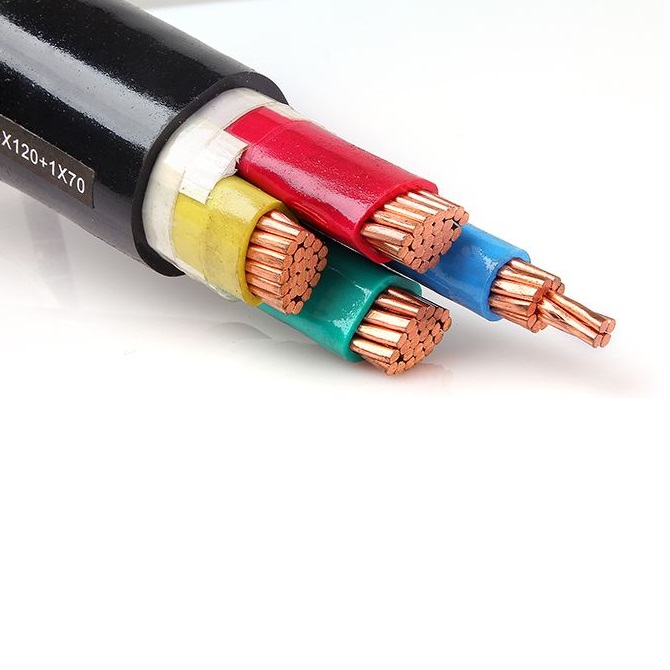
Defects in any internal structure are difficult to detect from the outside, but problems with the sheath are directly observable with the naked eye. The sheath is the first layer of protection for the cable's delicate internal structure. This is why cracked, worn, and swollen sheaths are very serious quality problems. To avoid such problems, igus offers cable sheaths made of seven different materials for users to choose from based on the corresponding operating environment of their machinery. Shielded cables are transmission lines that use a metal mesh braid to wrap the signal lines. The braid is typically made of red copper or tinned copper.
The wire and cable industry is the second largest industry in China after the automotive industry, with product variety satisfaction and domestic market share both exceeding 90%. Globally, China's total wire and cable output value has surpassed that of the United States, making it the world's largest wire and cable producer. Along with the rapid development of China's wire and cable industry, the number of new enterprises is constantly increasing, and the overall technical level of the industry has been greatly improved. Shielding is to ensure the transmission performance of the system in environments with electromagnetic interference. This anti-interference capability includes two aspects: the ability to resist external electromagnetic interference and the system's own ability to radiate electromagnetic interference.
Theoretically, wrapping cables and connectors with a layer of metallic shielding can effectively filter out unwanted electromagnetic waves (this is the method used in most shielding systems). However, how effective is this method?
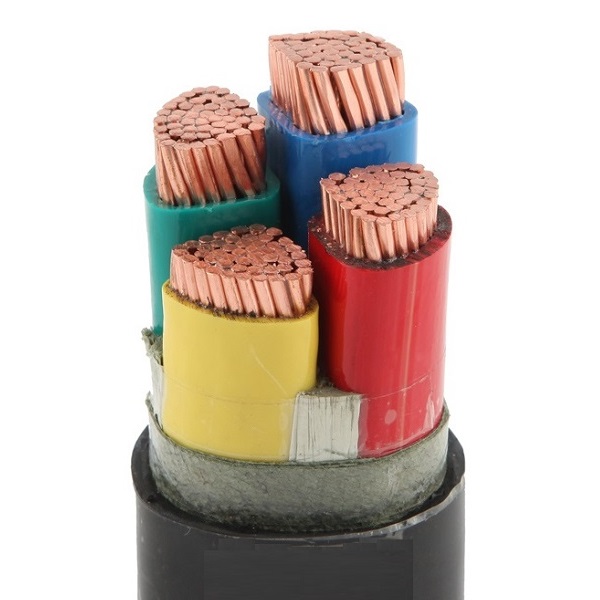
For a shielding system, a single metallic shielding layer is insufficient; more importantly, the shielding layer must be properly grounded to effectively conduct interference currents to the ground. However, in actual construction, shielding systems face some significant challenges: due to the stringent grounding requirements of shielding systems, poor grounding is easily caused, such as excessive grounding resistance or uneven grounding potential. This creates a potential difference between two points in the transmission system, resulting in current flowing through the metallic shielding layer, causing discontinuities and compromising its integrity.
In this case, the shielding layer itself becomes a major source of interference, causing its performance to be far inferior to an unshielded system. Shielded cables require grounding at both ends during high-frequency transmission, which further increases the likelihood of potential differences arising on the shielding layer. Therefore, the requirements of the shielding system itself constitute the biggest obstacle to ensuring its performance. A complete shielding system requires shielding at every point; if the shielding at any point fails to meet the requirements, it will inevitably affect the overall transmission performance of the system. However, few network hubs or computers on the market have shielding support, making it difficult to achieve shielding of the entire transmission link.
Armor-type Extruded Sheath
Manufacturing process and materials are also important factors determining product quality. In some so-called cable suitable for cable chains, the sheath is usually tubular, thus failing to provide the necessary support for the stranded structure during long-term bending, making the stranded structure prone to breakage. An armor-type extruded sheath is proposed. This sheath ensures that the core wires do not loosen during cable movement. This is because the sheath is formed by extrusion under extremely high pressure; it acts like a guide groove, guiding the movement of the core wires while also providing support. Therefore, it is very suitable for cable chains.
In summary, the quality assurance of highly flexible cables suitable for cable carriers includes: center stress relief design; multi-bundle cabling structure; armor-type extruded inner sheath in shielded cables; fully shielded braided insulation mesh; optimized shielding braiding angle; and armor-type extruded sheath.