

The extrusion process includes insulation and sheath production. Insulation production methods include coating, wrapping, extrusion, and combinations thereof. Currently, insulation production mainly involves coating (for winding wires, which are no longer subject to production license regulations) and extrusion (for wires and cables).
I. Plastic Extrusion Process
1. Continuous Extrusion Method
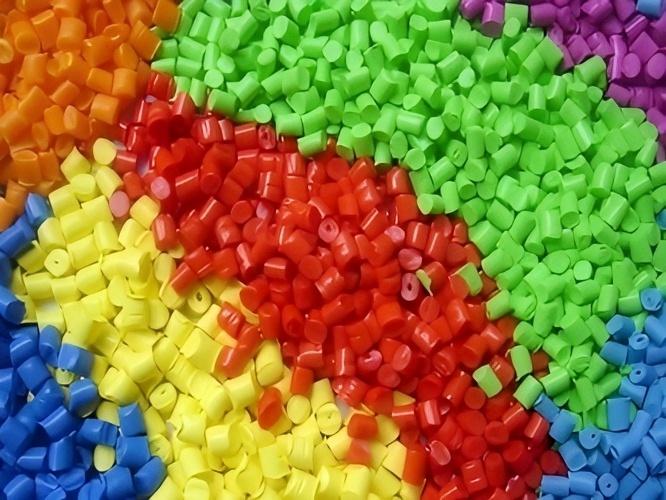
Extrusion equipment is generally a single-screw extruder. Before extrusion, the plastic must be checked for moisture and impurities. The screw is then preheated before being added to the hopper. During extrusion, the plastic in the hopper enters the barrel by gravity or the feeding screw. Under the thrust of the rotating screw, it is continuously propelled forward, gradually moving from the preheating section to the homogenization section.
Simultaneously, the plastic is agitated and extruded by the screw, and under the external heat of the barrel and the shear friction between the plastic and the equipment, it transforms into a viscous flow state, forming a continuous and uniform flow in the screw channel. Under the specified temperature, plastic transforms from a solid state to a molten, malleable substance. Driven or stirred by a screw, the fully plasticized plastic is pushed into the die head. The material flow reaching the die head passes through the annular gap between the die core and die sleeve, and is extruded from the die sleeve opening, encasing the conductor or wire core to form a continuous, dense insulation layer or sheath. After cooling and solidification, it becomes a wire and cable product.
II. Three Stages of the Extrusion Process
The most important basis for plastic extrusion is the plasticity of the plastic. The plasticization process in an extruder is a complex physical process, including mixing, crushing, melting, plasticizing, degassing, compaction, and final shaping. This continuous extrusion process is often artificially divided into different stages based on the different reactions of the plastic:
1. Plasticizing Stage (Mixing, Melting, and Homogenizing of Plastic)
This is completed inside the extruder barrel. Through the rotation of the screw, the plastic transforms from a granular solid into a plastic, viscous fluid. The plastic receives heat during the plasticizing stage from two sources: external electric heating of the barrel and frictional heat generated by screw rotation.
2. Molding Stage (Extrusion Molding of Plastics)
This stage takes place inside the die head. Due to screw rotation and pressure, the viscous fluid is pushed towards the die head. Through the mold inside the die head, the viscous fluid is shaped into extruded materials of various sizes and shapes, covering the wire core or conductor.
3. Shaping Stage (Cooling and Curing of the Plastic Layer)
This stage takes place in a cooling water tank or cooling pipes. After cooling, the extruded plastic layer changes from an amorphous plastic state to a shaped solid state.
III. Changes in Plastic Flow During the Plasticizing Stage
During the plasticizing stage, as the plastic moves along the screw axis towards the die head, it undergoes changes in temperature, pressure, viscosity, and even chemical structure. These changes differ in different sections of the screw. Based on the physical state changes during plastic flow, the plasticizing stage is artificially divided into the following three stages.
1. In the feeding section:
First, it provides a softening temperature for the granular solid plastic. Second, the shear stress generated between the rotating screw and the stationary barrel acts on the plastic granules, breaking down the softened plastic. Most importantly, the screw rotation generates a sufficiently large, continuous, and stable thrust and reverse friction force to form a continuous and stable extrusion pressure. This achieves agitation and homogenization of the broken plastic, and initiates initial heat exchange, thus laying the foundation for continuous and stable extrusion. The thrust generated in this stage directly affects the extrusion quality and output.
2. In the melting section:
In this section, the plastic encounters a higher temperature, which is the heat source. In addition to point heating outside the barrel, the frictional heat from the screw rotation also plays a role. The thrust from the feeding section and the reaction force from the homogenization section cause the plastic to reflux during its forward movement. This reflux not only further homogenizes the material but also increases the heat exchange of the plastic, achieving surface thermal equilibrium. Because the operating temperature at this stage exceeds the rheological temperature of the plastic, and the operating time is relatively long, the plastic undergoes a phase transition. The material in contact with the heated barrel begins to melt, forming a polymer melt film on the inner surface of the barrel. When the thickness of the melt film exceeds the gap between the screw tip and the barrel, it is scraped off by the rotating screw and accumulates in front of the advancing screw, forming a molten pool.
Due to the relative movement between the barrel and the root of the screw, the molten pool generates a circulating flow of material. Behind the screw tip is a solid bed (solid plastic). As the material moves forward along the screw channel, the depth of the screw channel in the melting section gradually decreases towards the homogenization section. The solid bed is continuously squeezed towards the inner wall of the barrel, accelerating the heat transfer process from the barrel to the solid bed. Simultaneously, the rotation of the screw exerts a shearing effect on the melt film on the inner wall of the barrel, causing the material at the interface between the melt film and the solid bed to melt. The width of the solid bed gradually decreases until it disappears completely, i.e., it changes from a solid state to a viscous flow state. At this stage, the molecular structure of the plastic undergoes a fundamental change. Intermolecular tension is extremely relaxed. If it is a crystalline polymer, the crystalline regions begin to decrease, and amorphous regions increase. Except for the very large molecules, the bulk has completed plasticization, the so-called "preliminary plasticization." Furthermore, under pressure, the gas contained in the solid material is expelled, achieving preliminary compaction.
3. In the homogenization section:
This section has the shallowest screw thread depth, meaning the screw channel volume is the smallest. Therefore, this is the section where the pressure between the screw and the barrel is the highest. Additionally, the thrust from the screw and the reaction forces from the screen plate, etc., are the direct contact zone between the plastic and the barrel. This section also has the highest extrusion temperature, so the radial and axial pressures on the plastic are the greatest at this stage. This high pressure is sufficient to expel all the gas contained within the plastic and compact the melt, making it dense. This is why this section is called the "pressure homogenization section."
IV. Flow State of Plastics During Extrusion
During extrusion, the rotation of the screw pushes the plastic forward, while the barrel remains stationary. This creates relative motion between the screw and barrel, generating friction that drags the plastic forward. Furthermore, the resistance from the die, perforated screen, and filter in the die head creates a reaction force on the plastic as it moves forward, further complicating the flow of plastic within the screw and barrel. The flow state of plastic is generally considered to consist of the following four flow patterns:
1. Forward Flow: This refers to the flow of plastic along the screw groove towards the die head. It is generated by the pushing force of the rotating screw and is the most important of the four flow patterns. The magnitude of the forward flow directly determines the extrusion volume.
2. Backward Flow (Counter-flow): Its direction is exactly opposite to the forward flow. It is caused by the pressure (reaction force of the plastic's forward movement) generated in the die head area due to the resistance from the die, screen, and filter in the die head. 3. **Backflow under Pressure:** This is the flow of plastic along the axis, perpendicular to the screw grooves. It is also formed by the pushing action of the rotating screw. Its flow is hindered by the resistance of the screw groove sidewalls. Due to the mutual resistance of the threads on both sides, and the rotating screw causing the plastic to tumble within the grooves, a circular flow is formed. Therefore, crossflow is essentially a circular flow.
Circulating flow is inseparable from the mixing and plasticizing of plastic into a molten state within the barrel. Circulating flow stirs and mixes the material in the barrel and facilitates heat exchange between the barrel and the material, which is important for improving extrusion quality, but has little effect on the extrusion flow rate.
4.Leakage Flow:This is also caused by the resistance of the die, screen, and filter in the die head. However, it is not the flow within the screw grooves, but rather a backflow formed in the gap between the screw and the barrel. It can also cause a loss of production capacity. Because the gap between the screw and the barrel is usually very small, the leakage flow rate is much smaller than that of forward and reverse flow under normal conditions.
During extrusion, leakage will affect the extrusion volume; increased leakage will decrease the extrusion volume. The four flow states of plastic do not appear in isolation. For a given plastic particle, there is neither true reverse flow nor closed circulation. The actual flow of molten plastic in the screw groove is a combination of the above four flow states, flowing forward in a helical trajectory.
5. Extrusion Quality
Extrusion quality mainly refers to whether the plastic is well plasticized and whether the geometric dimensions are uniform, i.e., whether the radial thickness is consistent and the axial outer diameter is uniform. Factors determining plasticization, besides the plastic itself, mainly include temperature, shear strain rate, and application time. Excessively high extrusion temperatures not only cause fluctuations in extrusion pressure but also lead to plastic decomposition and may even cause equipment accidents. While reducing the screw groove depth and increasing the screw length-to-diameter ratio is beneficial for heat exchange and extending the heating time, thus meeting the requirement of uniform plasticization, it will affect the extrusion volume and create difficulties in screw manufacturing and assembly.
Therefore, a crucial factor in ensuring uniform plasticization is increasing the shear strain rate generated by the screw rotation on the plastic. This achieves uniform mechanical mixing and balanced heat exchange during extrusion, thus guaranteeing uniform plasticization. The magnitude of this strain rate is determined by the shear strain force between the screw and the barrel. Therefore, while maintaining the required extrusion volume, the screw groove depth can be increased by increasing the screw speed.
Furthermore, the clearance between the screw and the barrel also affects extrusion quality. Excessive clearance increases backflow and leakage of the plastic, causing fluctuations in extrusion pressure and affecting the extrusion volume. Moreover, this increased backflow can lead to overheating of the plastic, resulting in scorching or difficulties in molding.