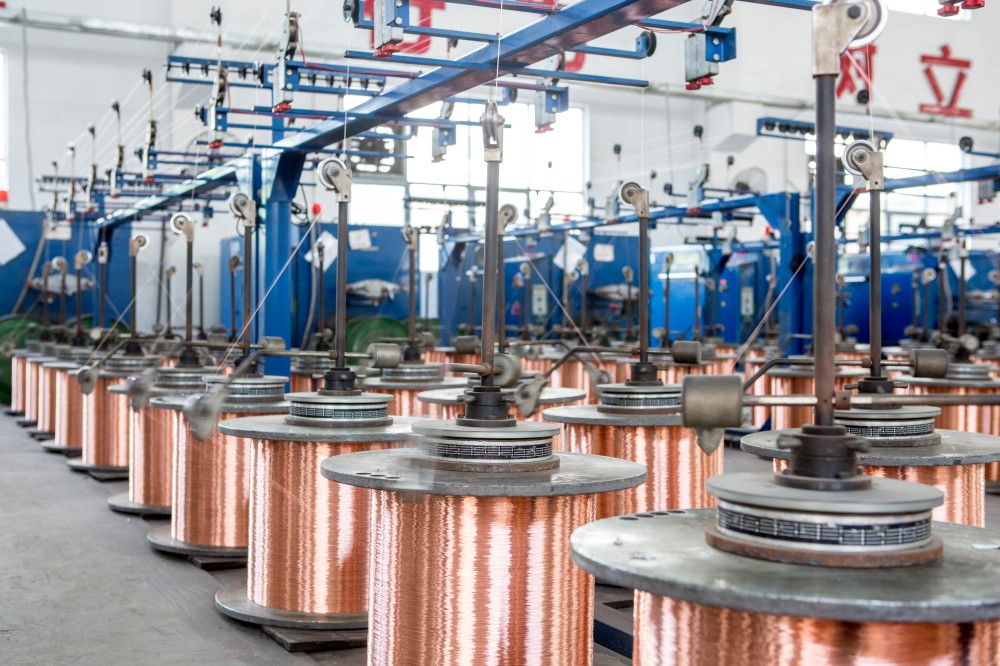
Differences in appearance, performance, and application scenarios between coaxial cables and overhead wires (overhead cables)
1. Appearance
Coaxial cables
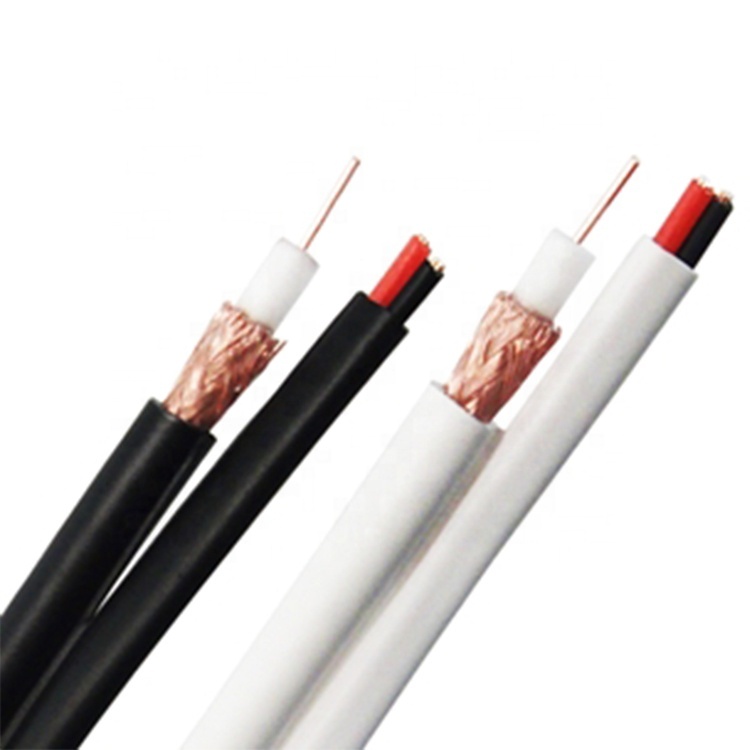
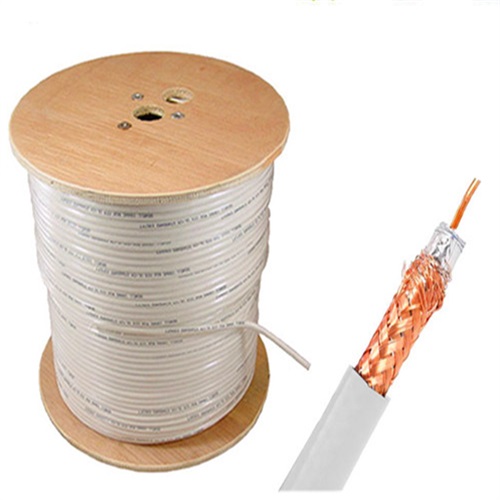
From the inside out, they consist of: a central copper conductor (solid or stranded), an insulation layer (polyethylene or foamed polyethylene), a mesh shield (copper or aluminum braid), and an outer jacket (PVC or Teflon).
Typical characteristics: a relatively large outer diameter (e.g., the inner diameter of the outer conductor of a small coaxial cable is 4.4mm), a smooth jacket surface, and may be printed with a model number (e.g., SYV-75-5).
Common types: RF coaxial cable (e.g., SYV-75 for television signals) and leaky coaxial cable (with a slotted outer conductor for tunnel communications).
Overhead wires (overhead cables)
Consists of one or more insulated conductors fixed to a pole. The conductors are covered with PVC or XLPE insulation and have no shielding.
Typical characteristics: a relatively small outer diameter (e.g., a 1.5mm² conductor has an outer diameter of approximately 3.1mm). The conductors are either bare or thinly insulated. Insulators are installed on the pole to secure the conductors. Common Types: Overhead Cables Supported by Steel Strand Wires, Self-Supporting Overhead Cables (Conductors with Built-In Load-Bearing Structures).
2. Performance Differences
Transmission Capacity
Coaxial Cable: Using high-frequency multiplexing technology, a single cable can support hundreds to tens of thousands of telephone lines (for example, medium coaxial cable supports 4,380 lines).
Overhead Wire: A single pair of wires supports up to 20 or more carrier telephone lines, with transmission capacity limited by the number of wire pairs.
Interference Resistance
Coaxial Cable: The mesh shield effectively isolates external interference, making it suitable for use in complex electromagnetic environments (such as industrial areas).
Overhead Wire: Susceptible to wind, temperature, and icing (for example, changes in conductor sag leading to tangling), and lacking a shield, it has weak interference resistance.
Transmission Frequency Range
Coaxial Cable: 0-6000kHz, supporting broadband signal transmission (such as television programs and digital communications).
Overhead Wire: Up to 150kHz, limited to narrowband signals (such as voice and low-speed data).
Environmental Adaptability
Coaxial Cable: The sheath material is oil-, acid-, and alkali-resistant, making it suitable for humid or corrosive environments.
Overhead Wires: Avoid areas prone to lightning and corrosive gases (such as near chemical plants).
3. Application Scenario Differences
Coaxial Cable Application Scenario
Long-Distance Communication Trunk Lines: Replace some overhead wires and support high-capacity telephone relays (such as lines from provincial capitals to the capital).
Video Transmission: Cable television (CATV) service lines and surveillance camera signal transmission.
Wireless Communication: Data lines from base stations to transmitting antennas, mobile communication antenna feeder systems.
Special Environments: Leaky coaxial cable is used for communication within subways and mine tunnels.
Overhead Wire Application Scenario
Short-Distance Communication: Connect user terminals to local telephone exchanges in urban suburbs and rural areas.
Low-Cost Scenario: Areas with low environmental requirements (such as non-tourist attractions and non-highway routes).
Temporary Wiring: Applications with short construction periods and requiring rapid deployment (such as temporary wiring for exhibitions).
Fixed Channels: Low-speed data transmission, such as letters, telegrams, and faxes.

4. Selection Recommendations
Preferred Scenarios for Coaxial Cable
Requires high-capacity, high-reliability transmission (such as long-distance trunk lines, video surveillance).
Complex electromagnetic environments (such as industrial areas, near high-voltage power lines).
Requires broadband signal support (such as television, digital communications).
Preferred Scenarios for Overhead Wires
Short-distance, low-cost wiring (such as rural areas, temporary lines).
Good environmental conditions (no corrosive gases, low lightning activity).
Simple transmission requirements (such as voice, low-speed data).
5. Precautions
Maintain a clear distance between the conductor and the shield of coaxial cable to avoid compression and deformation that may cause signal attenuation.
Overhead wires require regular inspection of pole loads (such as wind and ice) to prevent breakage and pole collapse.