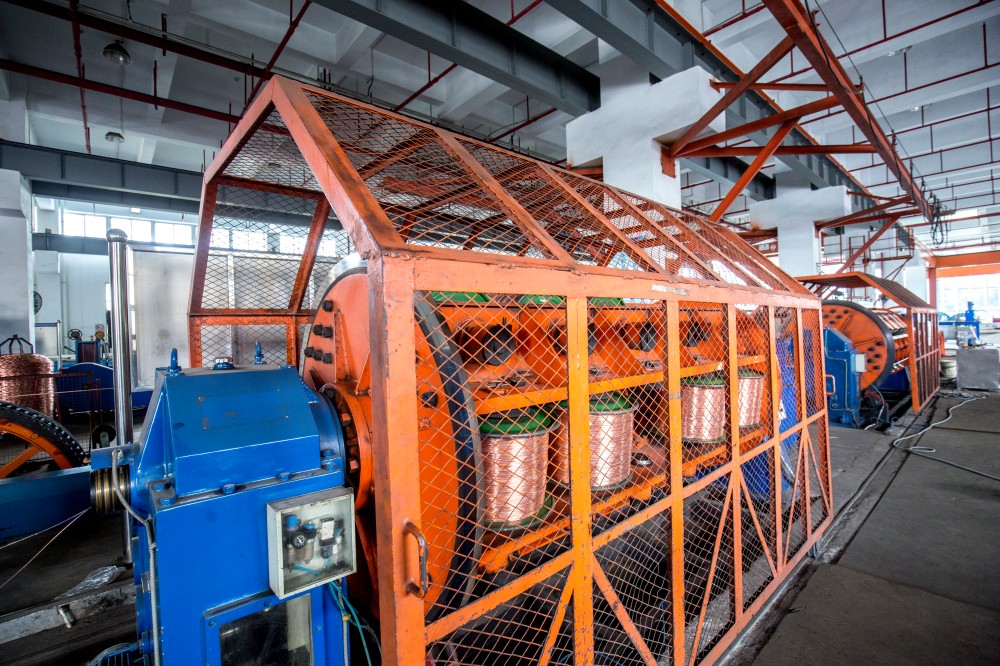
Twisting (stranding) is the process of twisting multiple small-diameter single wires according to a specific pattern into a larger cross-section conductive core.
1. Stranding is categorized into regular stranding and irregular stranding.
Regular stranding can be divided into regular concentric single-wire stranding and regular concentric stranded stranding. Regular concentric single-wire stranding:
⑴ Regular stranded wire: Single wires of the same diameter are regularly twisted in layers in a concentric pattern, with each layer twisted in opposite directions.
⑵ Composite stranded wire: This is a stranded wire made from single wires of the same diameter but different materials, or from different diameters and different materials. (Representative products include overhead conductors.)
Regular concentric stranded wire: Multiple strands of regular stranded wire or bundled wire are twisted concentrically.
Irregular stranding (bundled wire): This stranded wire is made by twisting multiple individual wires in the same lay direction, without following a twisting pattern. The individual wires are not fixed in position relative to each other, and the bundled wire's shape is difficult to maintain.
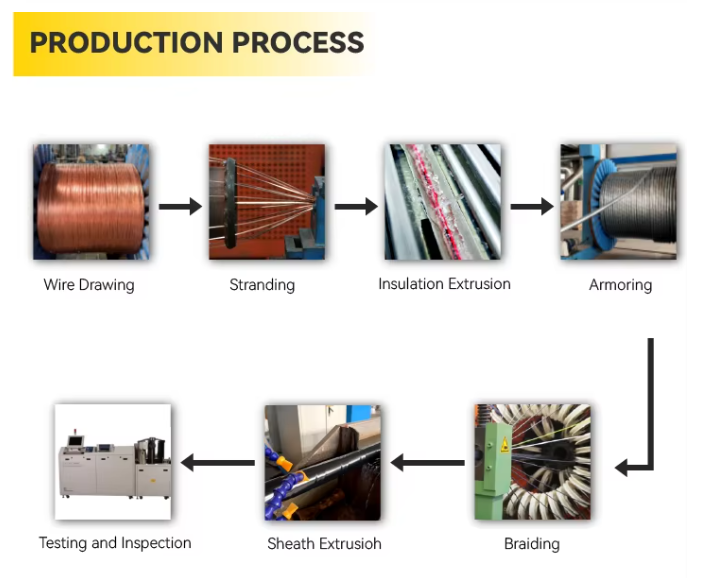
2. The Biggest Difference Between Bundled Wire and Ordinary Stranded Wire
In ordinary stranded wire, the individual wires are fixed in position and twisted in layers in a regular pattern. In bundled wire, the individual wires are not fixed in position and are twisted together without following a twisting pattern.
3. Characteristics of Irregular Stranding (Bundled Wire)
Because the individual wires in a bundled wire are twisted in a single direction, there is a large amount of slippage between the individual wires during bending, resulting in low bending resistance. Therefore, bundled wire has excellent bending performance. Bundled wire is used as the conductive core for wire and cable products that require flexibility and are subject to frequent movement.
4. Characteristics of Stranded Wire Cores
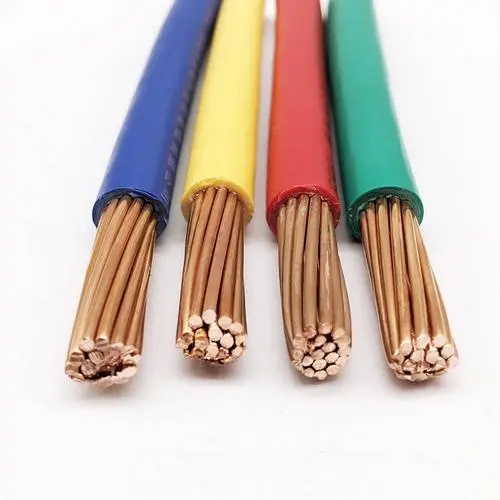
⑴ Good flexibility: Using multiple smaller diameter individual wires to twist together improves the cable's bending capacity, facilitating processing, manufacturing, and installation.
⑵ Good stability: The core of a wire is formed by twisting multiple single wires in a certain direction and twisting rules. Since each single wire in the twisted wire is alternately located in the elongation zone at the top of the strand and the compression zone at the bottom of the strand, the strand will not deform when it is bent.
⑶ Good reliability: The reliability of the conductive core is easily affected by the unevenness of the material or defects caused by twisting. The core of a wire twisted by multiple single wires is dispersed and will not be concentrated on a certain point of the conductor, so the reliability of the conductive core is much stronger.
⑷ High strength: Compared with a single wire of the same cross-sectional size and a twisted core, the strength of the twisted core is higher than that of the single wire.
5. Explanation of terms
(1) Pitch: The distance that a single wire moves forward along the axial direction.
(2) Pitch-to-diameter ratio: The ratio of the pitch length of the stranded wire to the diameter of the stranded wire.
(3) The relationship between pitch and softness of stranded wire: The smaller the pitch, the better the softness of the stranded wire. On the contrary, the larger the pitch, the worse the softness of the stranded wire.
(4) Twist-in coefficient: The ratio of the actual length of the single filament to the pitch length in one pitch of the stranded wire.
(5) Twist direction of the stranded wire: right (Z direction) left (S direction)
(6) Compressed conductor: Common compressed conductors include compressed circular, fan-shaped and compressed tile-shaped (five-core cable) and semi-circular (two-core cable)
6. Purpose of compression
(1) Compressed fan-shaped conductor: Reduce the outer diameter of the cable, save product cost and reduce cable weight.
(2) Compressed circular conductor: Improve the surface quality of the stranded conductor, reduce the conductor diameter, and improve the conductor filling factor. The surface of the conductor after compression is smooth, round and burr-free, and the electric field on the conductor surface is uniform. Save materials and reduce costs.
7. Conductor Classification
According to the GB/T3956 standard for "Conductors for Cables," conductors are classified into four types: Type 1, Type 2, Type 5, and Type 6. Type 1 is a solid conductor, and Type 2 is a stranded conductor, both suitable for fixed-lay cables. Types 5 and 6 are stranded conductors, used for flexible cables and cords, with Type 6 being more flexible than Type 5.