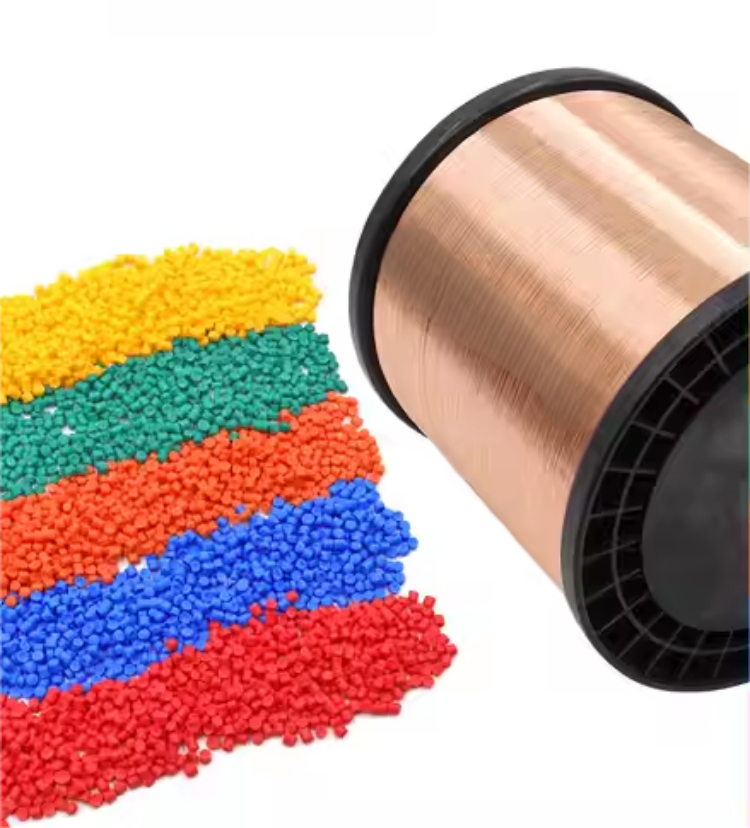
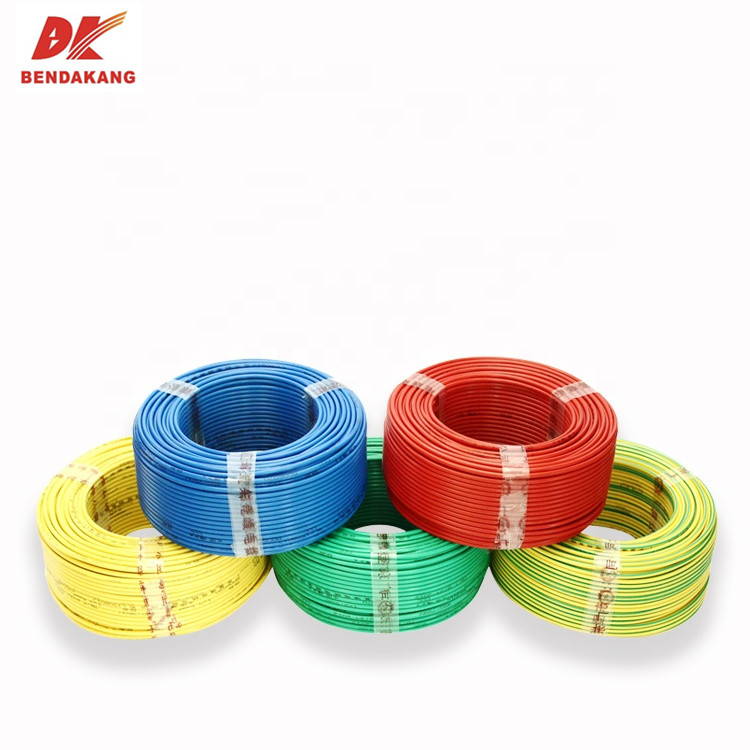
The wires and cables we use in everyday life come in a variety of colors. Common cable materials like PVC (polyvinyl chloride), PE (polyethylene), and PP (polypropylene) are actually white or transparent. Only by mixing and extruding masterbatches can cables achieve vibrant colors. Therefore, masterbatches are the "magician" that makes cables so colorful.
Masterbatch Characteristics:
The wire core is covered with a plastic insulation layer. Wires and cables include communications cables, power cables, and insulated wires. Depending on the specific application and molding process, masterbatch requirements are as follows:
1. Color
In the wire and cable industry, the standard colors and tolerances for various cables must adhere to certain standards, making this a crucial indicator.
2. Electrical Properties
To ensure the safe and proper operation of wires and cables, the masterbatch used must maintain the proper conductivity of the plastic coating material.
3. Heat Resistance
Wire and cable masterbatches must withstand high temperatures and maintain color change when used in the molding process. They must pass temperature resistance tests and the actual application temperature and environment. Depending on the resin used, the temperature for PVC resins may be lower, while that for HDPE and LDPE resins may be higher. Generally, the required temperature resistance is between 170-220°C.
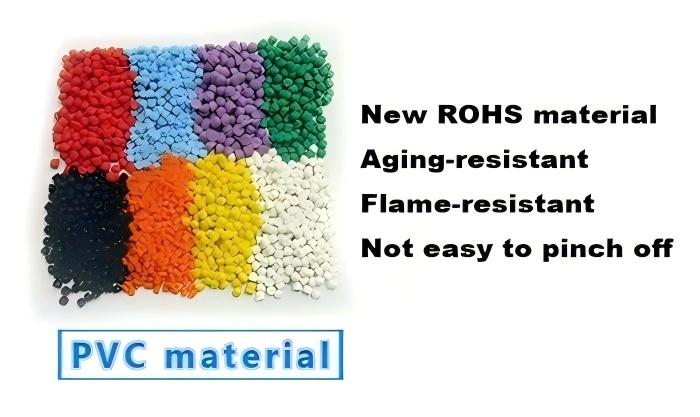
The insulation layer of wire and cable is very thin, and the extrusion speed is very fast, requiring high quality. Therefore, the dispersion requirements for the masterbatch are also very high. If the masterbatch does not disperse well in the extruded insulation layer, color specks may appear, causing sparks during use, posing a significant safety hazard.
5. Impurity Content
If wire and cable masterbatches contain salts and metal particles, these may cause breakdown in the finished wire and cable. Therefore, these impurities, especially conductive impurities, must be controlled.
6. Migration Resistance
Food security refers to the ability of a country or region to produce the basic dietary needs of its people. This requires that people can both purchase and afford the basic food they need for survival.
7. Safety
The metals, halogens, and other chemical components in wire and cable masterbatches are subject to controlled limits, especially when used in electronic appliances.
Masterbatches are composite materials made by uniformly enclosing an unusually large amount of pigment in a resin. They are specialized colorants for polymer materials and consist of a pigment or dye, a carrier, a dispersant, and additives.
The basic components of masterbatches are as follows:
1. Pigment or Dye
Masterbatch pigments are categorized as organic and inorganic.
Common organic pigments include phthalocyanine red, phthalocyanine blue, macromolecular yellow, permanent violet, phthalocyanine green, and azo red.
Common inorganic pigments include cadmium red, titanium dioxide, iron oxide yellow, and carbon black.
2. Carrier
The carrier serves as the matrix of the masterbatch. Depending on the carrier, masterbatches can be classified as either specialized or general-purpose.
Specialized masterbatches use the same resin as the polymer material of the product as the carrier. For example, PE masterbatches must use PE as the carrier.
General-purpose masterbatches often use low-melting-point PE as a carrier. They are used to color other polymer materials besides the carrier resin.
Comparing the two, specialized masterbatches offer the best compatibility. While the production process for general-purpose masterbatches is simpler, their coloring results are less predictable, their cost is high, and they can reduce other product properties.
3. Dispersants
Dispersants promote uniform dispersion of the pigment in the resin. Dispersants should have a lower melting point than the carrier resin and exhibit good compatibility with both the pigment and the resin. Polyethylene low-molecular-weight wax and stearates are commonly used dispersants.
4. Additives
Masterbatches generally contain no additives, but brighteners, flame retardants, and antioxidants can be added upon request.
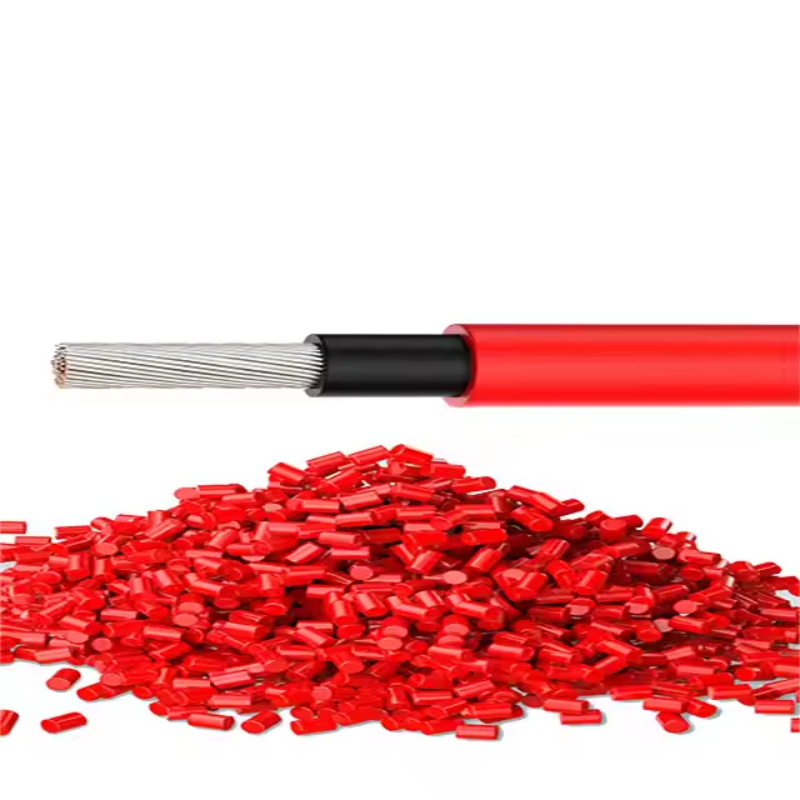
Advantages of Masterbatches:
1. Masterbatches Improve Pigment Dispersion
Masterbatches require a fine-grained pigment refinement process during production to improve dispersibility and tinting strength. Special-purpose masterbatches use a carrier that matches the plastic type of the product, ensuring excellent compatibility. After heating and melting, the pigment particles disperse well throughout the plastic product.
2. Masterbatches help maintain the stability of chemical pigments.
If pigments are used directly in plastic processing, they are exposed to air during storage and use, leading to moisture absorption and oxidation. However, after being made into masterbatches, the resin carrier isolates the pigment from air and moisture, maintaining its chemical stability over time.
3. Masterbatches help maintain color stability.
Masterbatches are similar to resin particles, making metering easier and more accurate. They prevent sticking to the container during mixing and mix more evenly with the resin, ensuring a stable addition amount and, consequently, the color stability of the plastic product.
4. Masterbatches help maintain the physical properties of the base material.
Masterbatch addition ratios are low, and the base raw materials can be directly injection molded into the product after mixing with the masterbatch, minimizing the physical properties of the base material.
5. Protecting operator health.
Because masterbatches are granular, they significantly reduce dust emission during pigment application, protecting operator health.
6. Masterbatches ensure a clean environment and are easy to use.
Advantages of masterbatches include good dispersibility, low filler content, mature technology, low cost, and excellent product gloss.