

Shielded cable is a conductor wrapped around a conductor. The surrounding conductor is called a shield, typically a braided copper mesh or copper foil (aluminum). The shield needs to be grounded, allowing any external interference signals to be directed to the ground. This prevents interference signals from entering the inner layer, while also reducing signal loss.
Structure: (Ordinary) Insulation layer + shield + conductor; (Advanced) Insulation layer + shield + signal conductor + shield ground conductor.
When choosing shielded cable, note that the insulation layer of the shield ground conductor is conductive and can provide continuity with the shield (having a certain resistance).
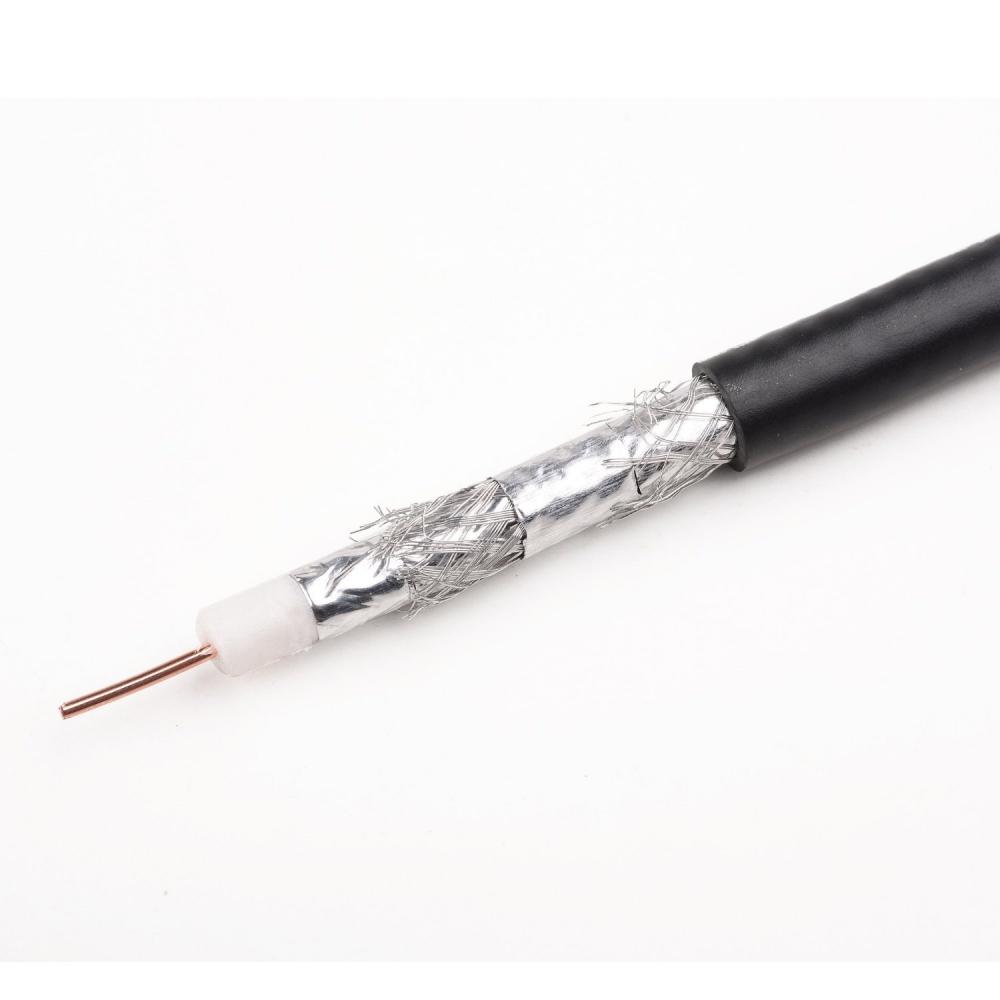
Shielded cabling originated in Europe. It adds a metallic shield to a standard unshielded cabling system. It utilizes the reflection, absorption, and skin effect of the metallic shield to prevent electromagnetic interference and radiation. This system combines the balanced nature of twisted-pair cabling with the shield's shielding properties, resulting in excellent electromagnetic compatibility (EMC) characteristics.
EMC refers to the ability of electronic equipment or network systems to resist electromagnetic interference while also preventing excessive electromagnetic radiation. In other words, the device or network system must be able to operate normally in a relatively harsh electromagnetic environment while also preventing excessive electromagnetic radiation that interferes with the normal operation of other nearby devices and networks.
The balance characteristics of U/UTP (unshielded) cable are not solely determined by the quality of the components themselves (such as the twisted pairs), but are also affected by the surrounding environment. This is because surrounding metal, hidden "grounding," and the pulling and bending during construction can disrupt the U/UTP (unshielded) cable's balance, thereby reducing EMC performance.
Therefore, to achieve consistent balance, there is only one solution: add an additional layer of aluminum foil to ground all cores. This aluminum foil provides additional protection for the fragile twisted-pair cores and artificially creates a balanced environment for the U/UTP (unshielded) cable, resulting in what we now call shielded cable.
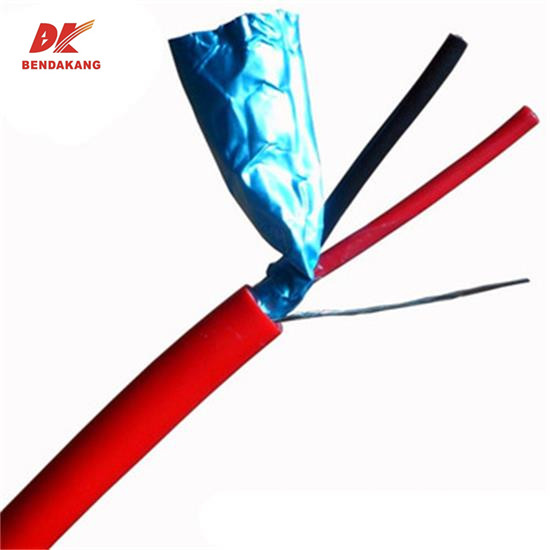
The shielding principle of shielded cable differs from the balanced cancellation principle of twisted-pair cable. Shielded cable uses one or two layers of aluminum foil around the four twisted-pair pairs. This utilizes the metal's reflection and absorption of electromagnetic waves, as well as the skin effect (the skin effect refers to the tendency of current distribution in a conductor's cross-section to tend toward the conductor's surface as frequency increases. Higher frequencies reduce the skin depth, meaning that higher frequencies reduce the penetration of electromagnetic waves). This effectively prevents external electromagnetic interference from entering the cable while also preventing internal signals from radiating out and disrupting other devices.
Experiments have shown that electromagnetic waves with frequencies exceeding 5MHz can only penetrate 38μm thick aluminum foil. If the shielding layer is thicker than 38μm, the frequencies of electromagnetic interference that can penetrate the cable will primarily be below 5MHz. The balanced cancellation principle of twisted-pair cable effectively cancels out low-frequency interference below 5MHz.
The earliest definition of cabling categorizes unshielded cables (UTP) and shielded cables (STP). Later, with technological advancements and varying process technologies, various shielding types have emerged: 1. F/UTP Foil Screened Cable: A single-layer aluminum foil shielding structure. 2. Foil and Braid Screened Cable: Double-layer shielding of aluminum foil and copper braid. a) SF/UTP: Both aluminum foil and copper braid are wrapped around the outer layers of the four pairs. b) S/FTP (PIMF): Each pair is shielded with aluminum foil, plus a copper braid wrapped around the outer layers of the four pairs. PIMF = Pair in Metal Foil.
Shielded cable primarily protects against external interference by ensuring signal transmission integrity through the shielding system. A shielded cabling system protects transmitted data from external electromagnetic interference (EMI) and radio frequency interference (RFI). Electromagnetic interference (EMI) is primarily low-frequency interference, with motors, fluorescent lights, and power lines being common sources. Radio frequency interference (RFI) is high-frequency interference, primarily radio frequency interference, including radio, television broadcasts, radar, and other wireless communications.
For EMI protection, braided shielding, typically metal mesh shielding, is the most effective due to its low critical resistance. For RFI, metal foil shielding is the most effective because the gaps created by the metal mesh shield allow high-frequency signals to pass freely. For mixed high- and low-frequency interference fields, a combined shielding method of metal foil and metal mesh is used, known as double-shielded cable (S/FTP). This allows the metal mesh shield to protect against low-frequency interference, while the metal foil shield is suitable for high-frequency interference.
The aluminum foil shielding layer in IBM ACS shielded cables is 50-62μm thick per layer, providing a more complete shielding effect. Furthermore, the use of a single shielding layer simplifies installation and reduces the risk of damage during installation. Furthermore, the thickness of the aluminum foil can withstand greater damage, thus providing users with higher-quality transmission performance.
Shielded Cable Connection Method:
One end of the shielded cable is grounded, while the other end is left floating.
When signal cables travel long distances, different grounding resistances at both ends or current flowing through the PEN line can lead to different grounding potentials at the two points. In this case, if both ends are grounded, current will flow through the shield layer, potentially interfering with the signal. Therefore, grounding one end at a time, while leaving the other end floating, is generally used to prevent this interference.
Grounding both ends of the shield provides better shielding, but signal distortion will increase.
Note that the two shield layers must be mutually insulated and isolated! If they are not, they should still be considered a single shield!
Grounding both ends of the outermost shield is because the potential difference introduced induces current, generating magnetic flux that reduces the source magnetic field strength, thereby essentially canceling out the voltage induced without the outer shield.
Grounding one end of the innermost shield, however, is only used for general ESD protection because there is no potential difference. The following specifications provide the best evidence!
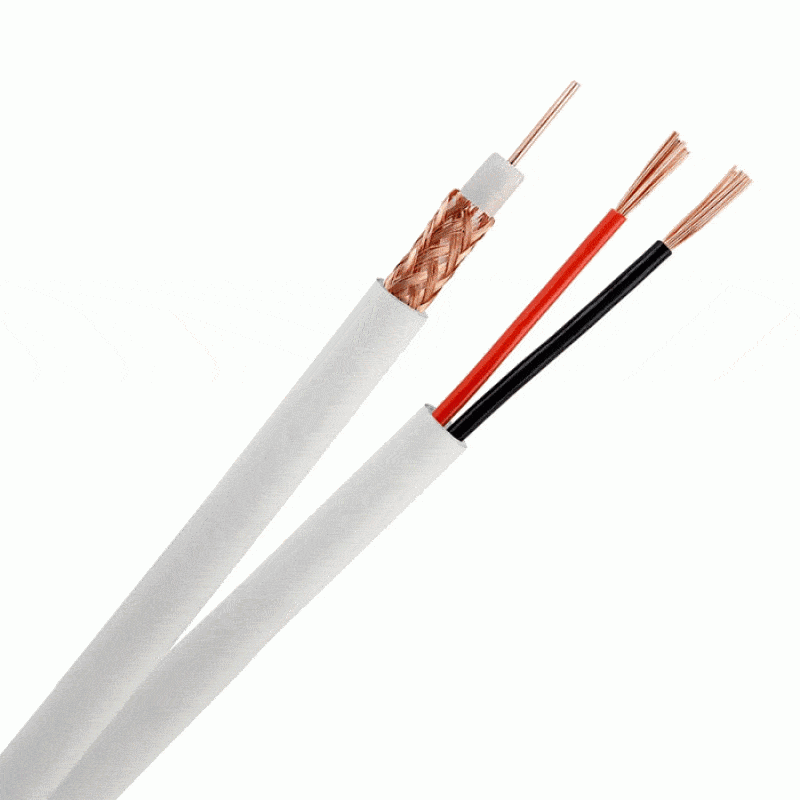
The principles are as follows:
1. Single-layer shielding, with one end grounded, creates no potential difference and is generally used for ESD protection.
2. Double-layer shielding, with both ends of the outermost shield grounded and one end of the inner shield grounded at the same potential. In this case, the potential difference induces current in the outer shield, generating magnetic flux that reduces the source magnetic field strength, thereby essentially canceling out the voltage induced without the outer shield.
To prevent ESD interference, single-point grounding is essential, regardless of whether the shield is single or double-layered. This is because single-point grounding discharges ESD the fastest.
The following two situations are excluded:
1. There is strong external current interference, and single-point grounding cannot guarantee the fastest static discharge.
If the grounding wire has a large cross-sectional area, ensuring the fastest static discharge, single-point grounding is also necessary. Of course, in this case, double shielding is unnecessary.
Otherwise, double shielding is necessary. The outer shield is primarily to reduce interference intensity, not eliminate it. In this case, multiple grounding points are necessary. While it may not completely eliminate interference, it must be reduced as quickly as possible. To achieve this, multiple grounding points are the best option.
For example, the cable tray in an enterprise is actually the outer shield layer, which must be grounded at multiple points as the first line of defense to reduce the intensity of the interference source.
The inner shield layer (in fact, people don't buy double-layer cables; generally, the outer layer is the cable tray, and the inner layer is the shielding layer of the shielded cable) must be grounded at a single point because the external intensity has been reduced, and the purpose of the inner layer is to discharge and eliminate interference as quickly as possible.
2. Safety requirements such as external electric shock and lightning protection. In this case, two layers of protection are necessary. The outer layer isn't used to eliminate interference; it's for safety reasons. To ensure personal and equipment safety, it must be grounded at multiple points. The inner layer is used to prevent interference, so it must be grounded at a single point.
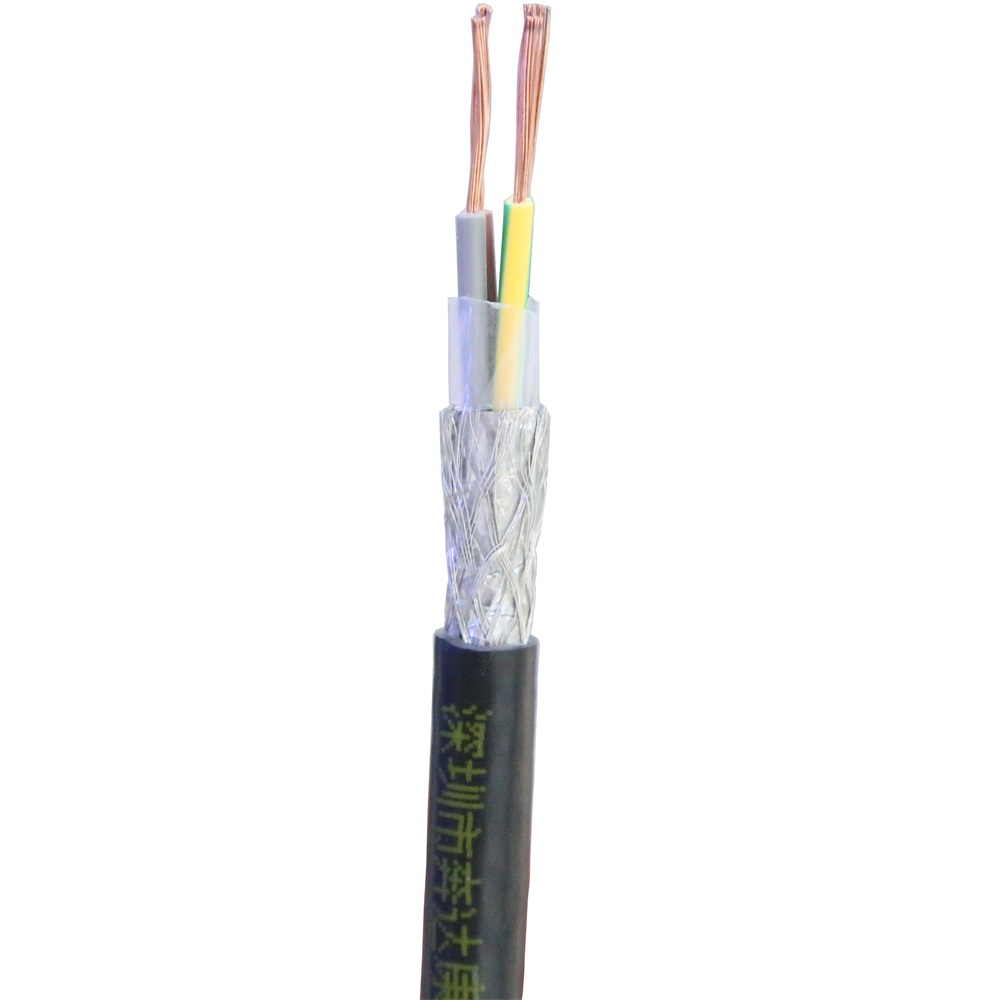
The shielding layer of a shielded cable is primarily made of non-magnetic materials such as copper and aluminum. Its thickness is very thin, far less than the skin depth of the metal at the operating frequency. The shielding effect is not primarily due to the reflection or absorption of electric and magnetic fields by the metal itself, but rather to the grounding of the shield layer. Different grounding methods directly affect the shielding effectiveness. Different grounding methods are used for electric and magnetic field shielding layers. Ungrounded, single-ended, or double-ended grounding can be used.