
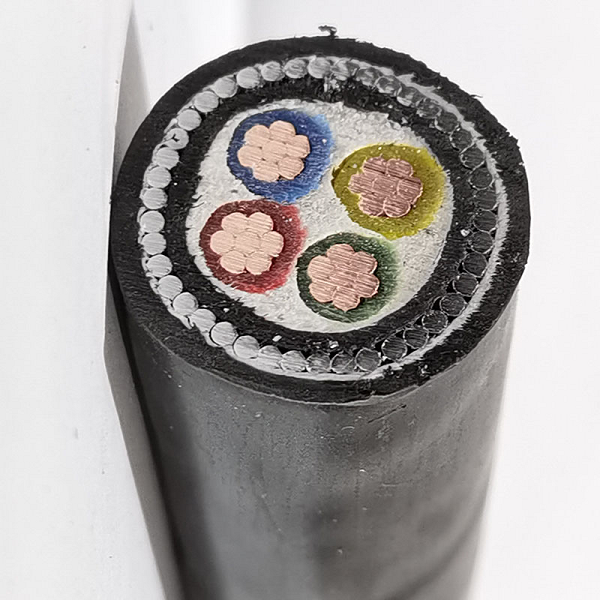
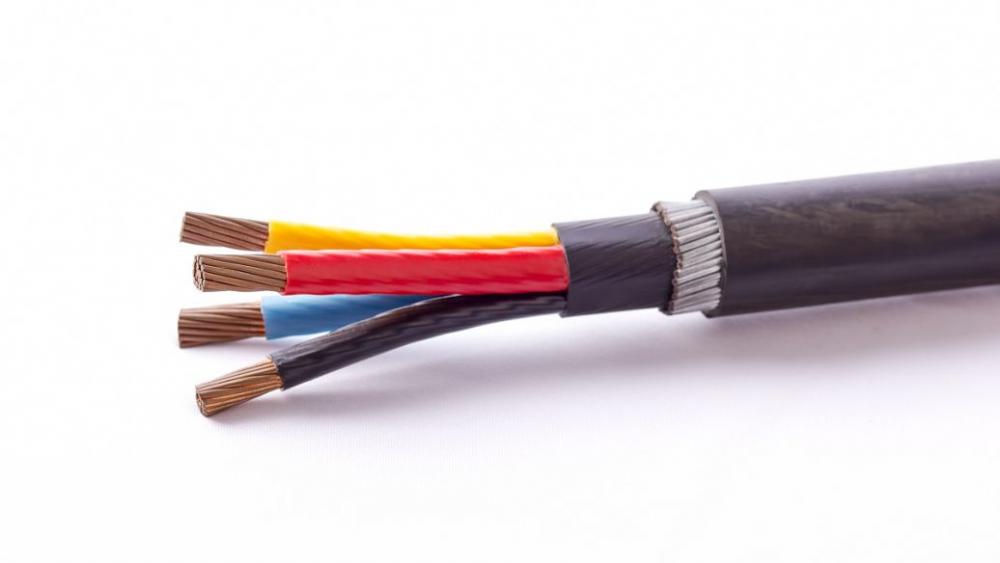
SWA Cable (Steel Wire Armored Cable) is a steel wire armored cable. Its core structure consists of a conductor wrapped in polyvinyl chloride (PVC) insulation, then armored with tightly wound galvanized steel wires, and a PVC sheath as the outermost layer.
1. Core Performance Advantages
Enhanced Mechanical Protection: The steel wire armor layer can withstand high tensile forces (such as soil pressure when buried underground) and mechanical shock (such as excavation and rolling during construction), making it suitable for complex environments. For example, the Suzhou Industrial Park Wastewater Treatment Plant chose aluminum-clad steel armored SWA cable instead of SWB, successfully resisting seawater corrosion and extending its service life to over 15 years.
Improved Interference Resistance: The armor layer creates a Faraday cage effect, effectively shielding against external electromagnetic interference and ensuring stable signal transmission. In machine tool manufacturing scenarios, SWA cable can reduce equipment malfunctions caused by electromagnetic interference by up to 40%.
Weather Resistance and Extended Service Life: The PVC sheath is waterproof, moisture-proof, and corrosion-resistant, making it suitable for both dry and humid indoor and outdoor environments. Data shows that SWA cables can operate stably within a temperature range of -30°C to +70°C, with a service life of over 20 years.

2. SWA Cable Types and Specifications
Based on application scenarios and voltage levels, SWA cables can be categorized into the following types:
Low-voltage power cables: Rated at 0.6/1kV, used for industrial equipment power supply and building power distribution systems. For example, 4-core 2.5mm² SWA cables are commonly used for outdoor building power supply and can withstand voltages of 600/1000V.
Control cables: Multi-core designs (such as 12-core and 19-core) are used for signal transmission in machine tool manufacturing and automation equipment. Their characteristic impedance matching ensures a signal transmission error rate of less than 0.1%.
Fire-resistant cables: Fire-resistant materials such as mica tape are added to the armor layer to ensure continuous power supply in the event of a fire. For example, hospital fire trunk lines require SWA fire-resistant cables that meet IEC60332-3-22 vertical flame barrier performance.
Specialty cables: such as UV-resistant (for outdoor use) and low-temperature cables (for -40°C environments). Aluminum-clad steel armored SWA cables offer a lifespan three times longer than traditional galvanized steel cables in corrosive seawater environments.
3. Key Differences Between SWA Cable and SWB Cable
SWB Cable (Steel Wire Braid Low Smoke Halogen-Free Cable) is a low-smoke, halogen-free steel wire braided cable. It differs significantly from SWA Cable in materials, performance, and application scenarios:
Sheath Material: SWA uses traditional PVC, which emits black smoke and pungent fumes when exposed to fire. SWB uses low-smoke, halogen-free polyolefin, which produces white smoke without chloride particles, with a smoke density and light transmittance exceeding 60%, meeting Class B1 flame retardancy standards.
Cost Difference: Due to the significant price fluctuations of low-smoke, halogen-free materials, SWB costs approximately 20% more than SWA.
Application Requirements: SWB hydraulic crimping requires heating to a temperature 10°C higher than normal, otherwise the heat shrink tubing will wrinkle. SWA can still be crimped using traditional flame shrinking methods.
Application Scenarios: SWB is suitable for high-traffic environments (such as airport terminals and office building elevator shafts), while SWA is more suitable for highly exposed environments (such as underground cable trenches and bridge cable installations).
4. SWA Cable Application Scenarios and Selection Recommendations
Industrial Environments:
Applicable Scenarios: Machine tool manufacturing, power plants, refrigeration equipment, and other locations requiring strict electrical safety.
Selection Recommendations: Oil- and chemical-resistant SWA cables are preferred. For example, tinned copper conductors enhance oxidation resistance. For example, an automobile manufacturer saw a 35% reduction in equipment failure rate after adopting tinned copper SWA cables.
Infrastructure:
Applicable Scenarios: Underground cable trenches and bridge cable installations, among other locations with high exposure.
Selection Recommendations: Use reinforced armor (such as double-layer steel wire) or add a longitudinal water barrier to prevent rainwater penetration. Hubei Metro Line 6 successfully addressed excessive humidity by replacing SWB with SWA cables.
Alternative Solutions for Special Scenarios:
Corrosive Seawater Environments: Use aluminum-clad steel armored SWA cable, which offers superior resistance to seawater hydrolysis than galvanized steel.
High Flexibility Requirements: Open-pit mining excavators utilize multi-bend, high-strength SWA cable, offering superior cost-performance compared to SWB.
Avoidance Guide:
Mixing Cables is Strictly Prohibited: Hospital fire trunk lines must use SWB. Misuse of SWA may result in excessive smoke toxicity during a fire.
Current Parameter Verification: A construction team mistakenly used 35mm² SWA cable instead of 50mm² SWB, resulting in a joint explosion caused by peak summer current.