

1. Material composition
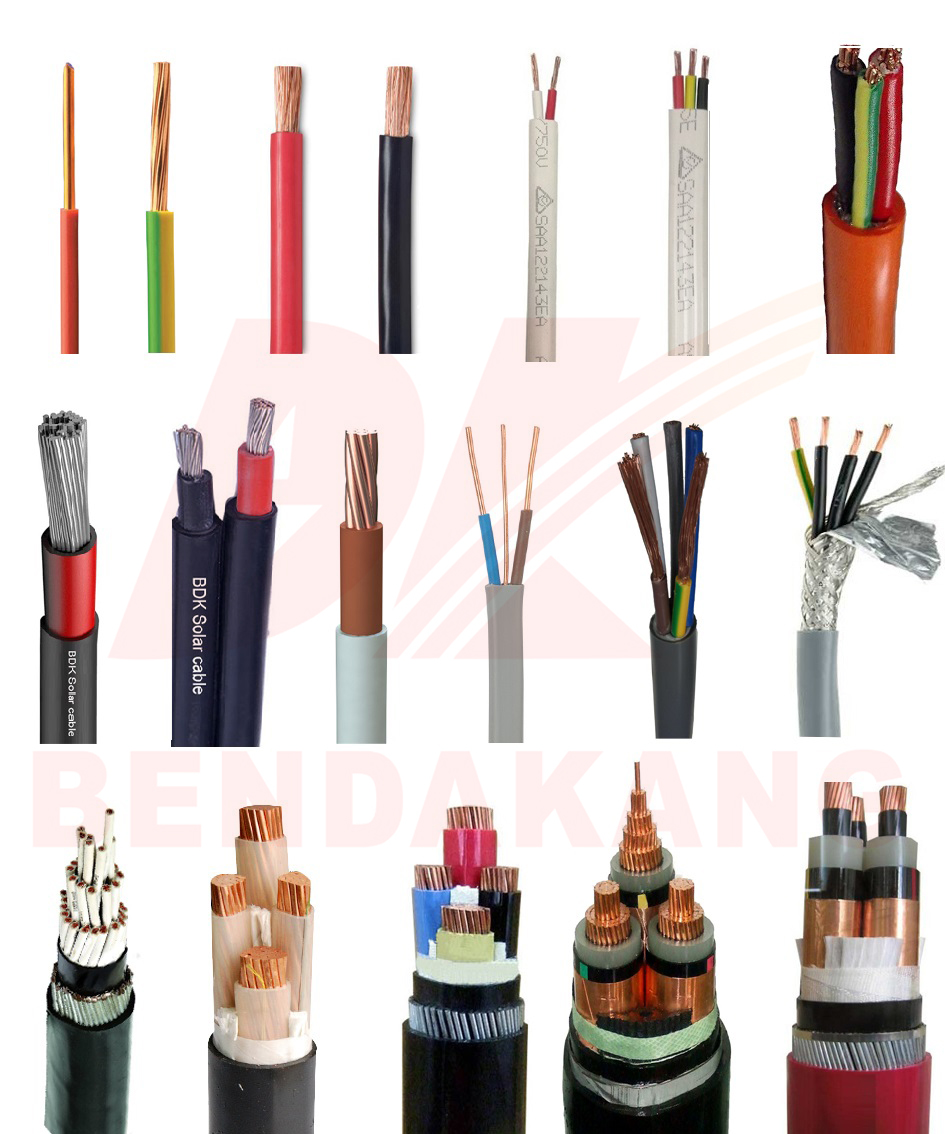
The core materials of electrical wire include conductor and insulation layer. Some high-end products also include shielding layer or sheath:
Conductor material:
Bare copper: excellent conductivity (conductivity about 58 MS/m), low cost, but easy to oxidize, suitable for dry environment.
Tinned copper: tinning on the surface of copper (thickness about 1-5μm), corrosion resistance increased by 3-5 times, life extended to more than 10 years, often used in humid or chemical environment.
Aluminum: density is only 30% of copper, cost is reduced by 40%, but conductivity is poor (conductivity about 35 MS/m), mostly used in low voltage and high current scenarios (such as power transmission).
Insulation material:
PVC (polyvinyl chloride): temperature resistance 80-105℃, voltage resistance 300-600V, low cost, accounting for more than 60% of the market share, but contains halogens and produces toxic gases when burned.
Silicone rubber: temperature resistance -60℃ to 200℃, voltage resistance up to 10kV, excellent flexibility, often used in aerospace or medical equipment.
Teflon (PTFE): temperature resistance -200℃ to 260℃, strong chemical corrosion resistance, low friction coefficient, suitable for high-frequency signal transmission (such as HDMI cable).
Shielding layer:
Aluminum foil shielding: attenuates interference signals by 10-20dB, low cost, but poor high-frequency performance.
Braided shielding: coverage can reach 95%, attenuates interference signals by 30-50dB, suitable for high-frequency communication (such as USB 3.0).
2. Type classification
According to conductor structure:
Single-core wire: conductor diameter 0.08-6mm, high tensile strength (up to 200MPa), suitable for fixed wiring (such as building power lines).
Multi-core wire: 7-41 filaments twisted (such as 7/0.16mm), flexibility increased by 3-5 times, excellent fatigue resistance, suitable for mobile devices (such as robot cables).
According to insulation characteristics:
PVC: such as UL1007 (temperature resistance 80℃), accounting for 45% of the electronic wire market, costing about $0.02/meter.
Silicone: such as UL1571 (temperature resistance 150℃), costing about $0.1/meter, mostly used in high temperature environments.
According to function:
Data line: supports USB 2.0 (480Mbps) or USB 3.0 (5Gbps), transmission delay <1ns, bit error rate <10⁻¹².
Power line: rated current can reach 30A (such as 16AWG line), voltage drop <0.5V/meter, efficiency >95%.
3. Data characteristics
Specification parameters:
AWG (American Wire Gauge): The smaller the value, the thicker the wire diameter (such as 24AWG diameter 0.51mm, 16AWG diameter 1.31mm).
Impedance: single-core line impedance <50Ω/meter, multi-core line impedance <100Ω/meter, meeting signal integrity requirements.
Performance indicators:
Withstand voltage test: Passed AC 2000V/1 minute test, leakage current <0.5mA.
Burning test: Meets UL VW-1 vertical flame retardant standard, burning time <60 seconds.
4. Advantages of use
Efficiency improvement:
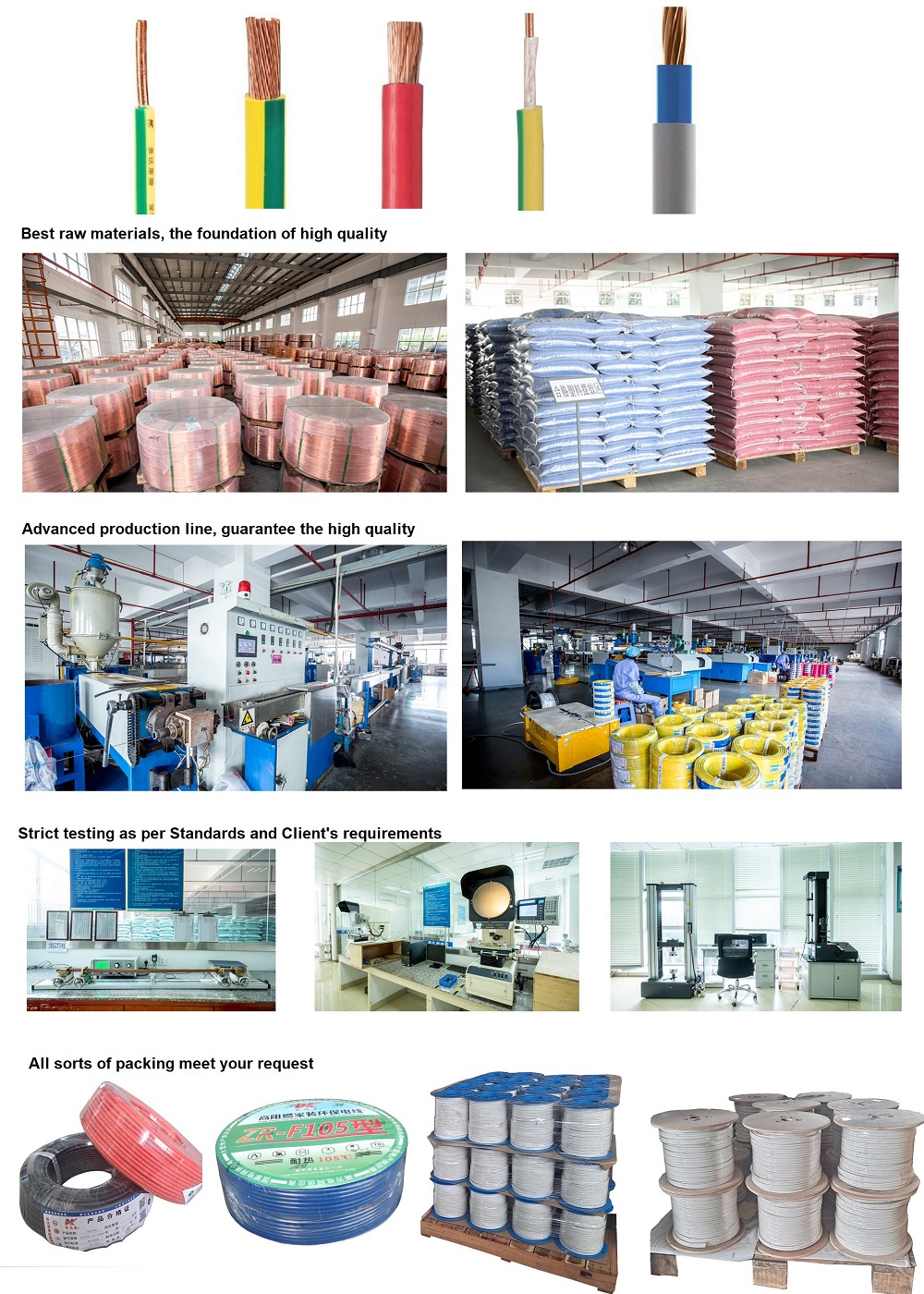
Automated production: Wire processing speed can reach 500 meters/minute, labor costs are reduced by 70%.
Cost optimization:
Aluminum conductor wire costs 40% less than copper, weighs 60% less, and transportation costs are reduced by 30%.
The life of multi-core wire is 2-3 times longer than that of single-core wire, and maintenance costs are reduced by 50%.
Enhanced reliability:
Tinned copper conductors have improved corrosion resistance, and the failure rate has dropped from 0.5%/year to 0.1%/year.
The shielding layer reduces electromagnetic interference (EMI) by 30dB and improves signal stability by 90%.
5. Application fields and scenarios
Consumer electronics:
Mobile phone data cable: 24AWG tinned copper + PVC insulation, supports 5A fast charging, and charging efficiency >90%.
Headphone cable: Use 7/0.12mm multi-core wire + silicone insulation, bending life > 100,000 times.
Industrial automation:
Robot cable: Use 32AWG multi-core wire + braided shield, transmission frequency up to 100MHz, delay <1μs.
PLC control system: Use 16AWG single-core wire, rated current 15A, voltage drop <0.3V/meter.
New energy field:
Photovoltaic cable: Use double-layer insulation (PVC+XLPE), temperature resistance 120℃, life > 25 years.
Electric vehicle charging cable: Use 6AWG tinned copper + Teflon insulation, support 350kW fast charging, efficiency > 95%.
Communication industry:
5G base station: Use low-loss coaxial cable (attenuation <0.1dB/meter), support 28GHz frequency band transmission.
Fiber jumper: Use 24AWG single-core wire + aluminum foil shielding, transmission rate up to 100Gbps.