

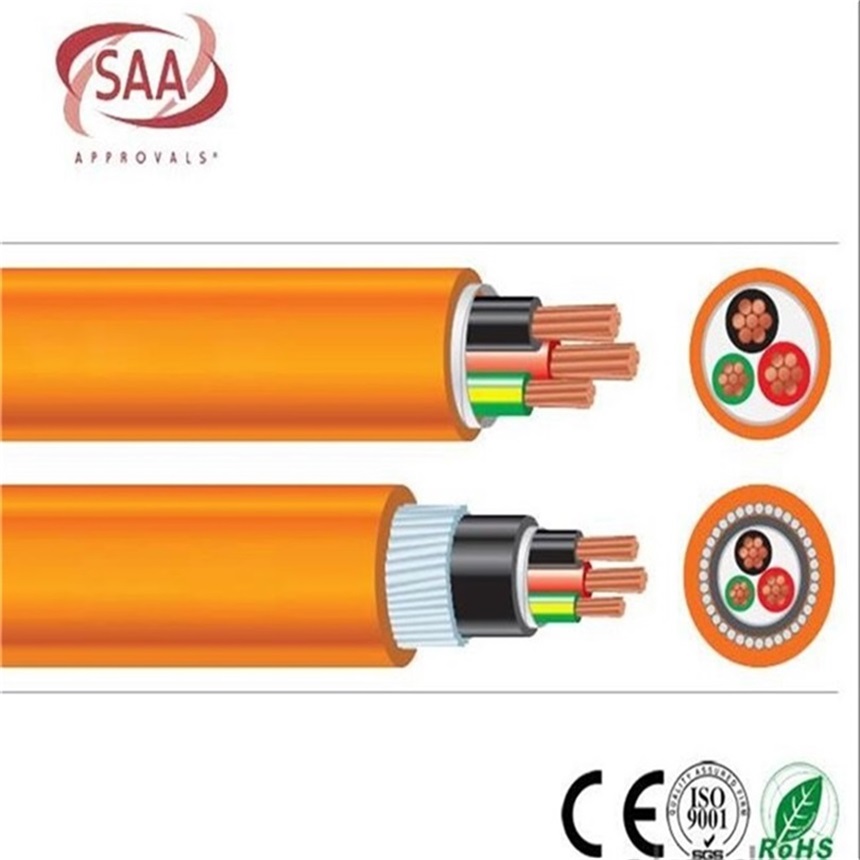
Orange Circular Cable uses PVC (polyvinyl chloride) or XLPE (cross-linked polyethylene) as insulation material, covered with orange PVC sheath, and the core conductor is annealed solid copper or compacted stranded copper.
1. Material characteristics: a combination of safety and durability
Insulation performance
PVC insulation: wide temperature range (-15℃ to 70℃), stable electrical insulation, but slightly weaker dielectric properties than XLPE, suitable for low voltage scenarios (such as 0.6/1kV voltage level).
XLPE insulation: temperature resistance up to 90℃, stronger anti-aging and chemical corrosion resistance, suitable for high temperature or harsh environment.
Sheath characteristics
The orange PVC sheath is designed with high visibility and meets safety regulations (such as AS/NZS 5000.1 standard), which is easy to quickly identify during construction and maintenance. It also has UV resistance, wear resistance, and flame retardant properties to reduce fire risks.
Conductor structure
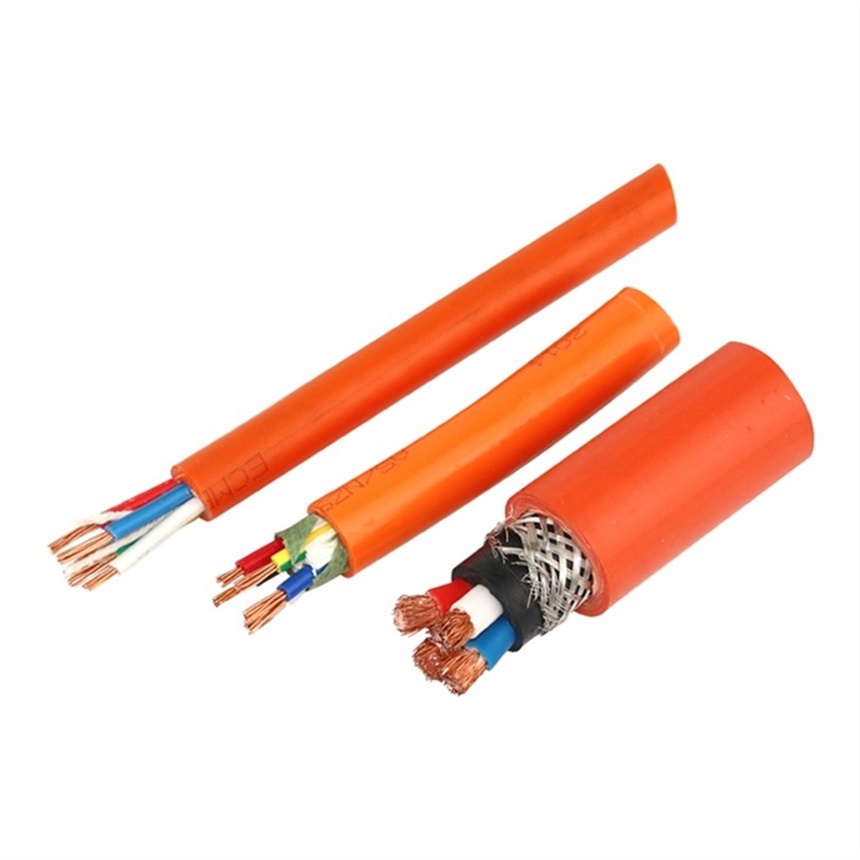
Multi-stranded copper conductors (such as 7/0.50mm, 19/1.35mm and other specifications) are used to improve flexibility and bending resistance, and adapt to installation scenarios with frequent movement or bending.
2. Core use: The main force of low-voltage power distribution
Orange Circular Cable mainly serves the low-voltage power distribution system. Typical application scenarios include:
Building power distribution
Used for power transmission of main circuits, branches and sub-circuits in buildings, such as power supply for lighting, air conditioning, elevators and other equipment.
Adapt to conduit burial, underground pipelines or open installation to meet the wiring needs of different building structures.
Industrial facilities
In industrial environments such as factories and workshops, it provides stable power for mechanical equipment and control cabinets, and supports three-phase or single-phase power supply systems.
Infrastructure
Applied to low-voltage distribution networks of public facilities such as airports, subway stations, and data centers to ensure high-reliability power supply.
3. Difference from other cables: differentiation of functions and scenarios
Orange Circular Cable
Structure: circular cross-section, multi-core (such as 4 cores + ground wire)
Voltage level: low voltage (0.6/1kV)
Sheath color: orange (high visibility, safety warning)
Application scenario: mainly power distribution
Installation flexibility: adapt to bending and movement, but occupy a large space
Other common cables
Structure: flat cable (Flexible Flat Cable, FFC), coaxial cable, optical fiber, etc.
Voltage level: medium and high voltage cable (such as above 10kV), weak current signal cable
Sheath color: gray, black, white, etc. (general or concealed design)
Application scenario: data transmission (such as Ethernet cable), special environment (such as fireproof cable)
Installation flexibility: flat cable saves more space, optical fiber is suitable for long-distance high-speed transmission
4. Applicable institutions: priority choice for safety and efficiency
The following institutions are suitable for Orange Circular due to safety regulations, power requirements or environmental characteristics Cable:
Public building management units
Schools, hospitals, and libraries: They need to meet high safety standards. The orange sheath facilitates quick identification of cable paths and reduces the risk of misoperation during construction.
Government office buildings: Low-voltage power distribution systems need to balance reliability and ease of maintenance. Cables that meet AS/NZS standards can simplify the acceptance process.
Industrial and manufacturing enterprises
Factories and workshops: Mechanical equipment power supply requires bending-resistant cables, and twisted copper conductors can reduce the risk of breakage caused by frequent movement.
Energy facilities (such as substations and power plants): Low-voltage auxiliary systems (such as control circuits and lighting) require flame-retardant sheaths to improve fire safety.
Infrastructure operators
Transportation hubs (airports, subway stations): High-visibility cables are required in high-traffic areas to facilitate emergency maintenance and troubleshooting.
Data centers: Although they are mainly weak current, the low-voltage power distribution part requires stable cables. The orange design can distinguish between strong and weak current lines to reduce the risk of misconnection.
Engineering contractors and installation companies
In building electrical installation projects, Orange Circular Cable that complies with international standards (such as SAA certification) can simplify the procurement process and avoid compatibility issues.
5. Selection recommendations: balance performance and cost
Environmental adaptability
High temperature or chemical corrosion environment: XLPE insulated cable is preferred.
Frequently moving scenarios: Use stranded copper conductor specifications (such as 19/1.78mm) to improve bending resistance.
Compliance
Ensure that the cable meets the standards of the target market (such as AS/NZS 5000.1 in Australia/New Zealand) to avoid certification risks.
Cost optimization
Low load scenario: PVC insulated cable can be selected to reduce initial procurement costs.
Long-distance wiring: The voltage drop needs to be calculated and the appropriate cross-sectional area (such as 10mm² and above conductors) is selected.
With its high safety, durability and standardized design, Orange Circular Cable has become a reliable choice in the field of low-voltage power distribution, especially for public utilities and industrial scenarios with strict safety regulations.