

I. Product Structure
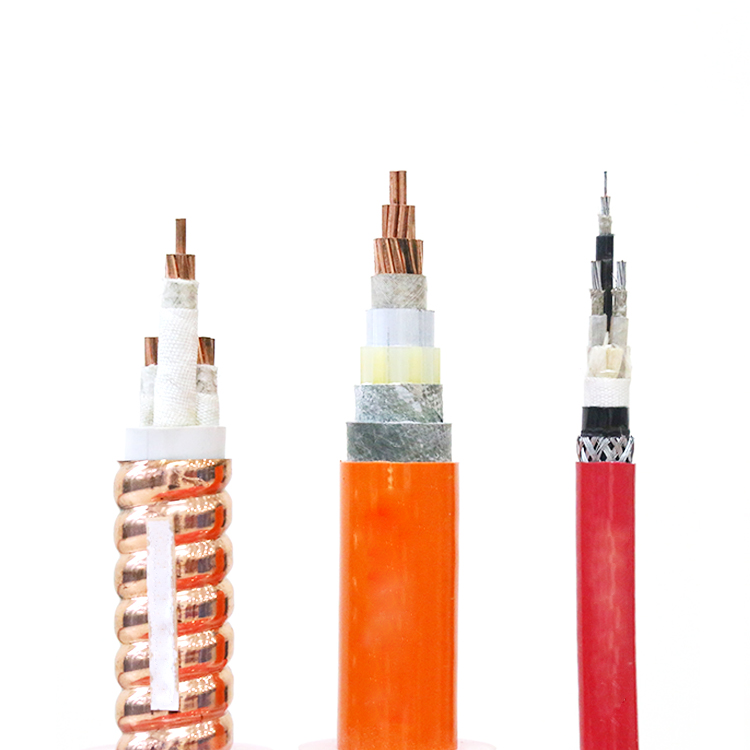
1. BTLY New Type Aluminum-Sheathed Continuously Extruded Mineral Insulated Cable Structure:
① Copper conductor ② Phlogopite mica tape insulation ③ Aluminum metal sheath ④ Cross-linked isolation sheath ⑤ Mg(OH) or Al(OH) fire-resistant layer ⑥ Halogen-free low-smoke polyolefin outer sheath
2. YTTW Flexible Fireproof Cable Structure:
① Copper conductor ② High-temperature resistant (1375℃) non-combustible inorganic (mineral) insulation tape ③ Outer copper sheath
II. Classification of Mica Tape
1. Inorganic (mineral) insulation tape, commonly known as synthetic mica tape, pv cable,home wiring,is also called fire-resistant mica tape, a type of fire-resistant insulating material.
2. According to application, it can be divided into: mica tape for motors and mica tape for cables.
According to structure, it can be divided into: double-sided tape, single-sided tape, three-in-one tape, double-film tape, single-film tape, etc.
According to mica, it can be divided into: synthetic mica tape, phlogopite mica tape, and muscovite mica tape.
Synthetic mica tape is the best, followed by muscovite tape, and then phlogopite tape is the worst.
High Temperature Insulation Performance: Synthetic mica tape is the best, followed by phlogopite tape, and then muscovite tape is the worst.
High Temperature Resistance: Synthetic mica tape (fluorophlogopite tape), which contains no water of crystallization, has a melting point of 1375℃, a large safety margin, and the best high temperature resistance. Phlogopite releases water of crystallization above 800℃, resulting in slightly lower high temperature resistance. Muscovite releases water of crystallization at 600℃, resulting in poor high temperature resistance.
4. Synthetic Mica Tape
Synthetic mica is an artificial mica synthesized under normal pressure by replacing hydroxyl groups with fluoride ions. It is characterized by large size and complete crystal structure. Synthetic mica tape is made by using mica paper, made from synthetic mica, as the main material, and then bonding glass cloth to one or both sides with adhesive. Tape with glass cloth bonded to one side of the mica paper is called "single-sided tape," and tape with glass cloth bonded to both sides is called "double-sided tape." During manufacturing, several structural layers are bonded together, then dried in an oven, wound up, and finally slit into strips of different specifications.
Synthetic mica tape, in addition to possessing the characteristics of natural mica tape—namely, low coefficient of expansion, high dielectric strength, high resistivity, and uniform dielectric constant—is characterized by its high heat resistance, reaching Class A fire resistance (950-1000℃). Synthetic mica tape has a temperature resistance greater than 1000℃, a thickness range of 0.08-0.15mm, and a maximum supplied width of 920mm.
5. Phlogopite Tape Phlogopite series mica tapes possess excellent electrical insulation and heat resistance, as well as strong resistance to acids, alkalis, compression, stripping, and radiation. They also exhibit good flexibility, bending ability, and tensile strength, making them suitable for high-speed winding. Fire resistance tests show that wires and cables wrapped with phlogopite tape can withstand 840℃ and 1000V for 90 minutes without breakdown.
Phlogopite fiberglass fire-resistant tape is widely used in high-rise buildings, subways, large power plants, and important industrial and mining enterprises—places related to fire safety and fire rescue. For example, it's used for power supply and control lines for fire-fighting equipment and emergency lighting. Due to its low price, it's the preferred material for fire-resistant cables.
6. Related Information on Synthetic Mica Tape
1) Application of Synthetic Mica Tape in Class A Fire-Resistant Cables
The application areas of Class A fire-resistant cables are gradually expanding, from initial offshore oil platforms to aviation, aerospace, marine, subway, tunnel, commercial buildings, hospitals, dance halls, metallurgy, chemical industry, and power plants—occurring in situations requiring high fire resistance ratings. In recent years, with the maturation of Class A fire-resistant synthetic mica tape manufacturing technology, the usage of Class A fire-resistant cables made from it is continuously increasing. As is well known, fire-resistant mica tape is divided into two categories: Class A (950-1000℃) and Class B (750-800℃). Phlogopite mica tape and synthetic mica tape are the two most popular types on the market.
2) Regarding the toxicity of synthetic mica tape
Synthetic mica tape is made from fluorophlogopite raw material. The structural formula of phlogopite is Kmg3(AlSi3O10)(OH)2, while that of fluorophlogopite is Kmg3(AlSi3O10)(OH)F2. From a molecular structure perspective, the difference lies in the presence of OH ions in the former and F ions in the latter. The fluorine content is 8.89%, and it is precisely the presence of F ions in synthetic mica that significantly improves its heat resistance. However, the fluorine content of synthetic mica is a pretext used by foreign manufacturers of film-reinforced phlogopite tape for competitive advantage. In reality, the presence or absence of fluorine is not the key factor for fire-resistant cables; the crucial issue is the amount of fluorine released during combustion and whether it reaches a lethal dose. One foreign company only states that it uses a "polymer film" in its film-reinforced phlogopite tape, without mentioning whether this polymer contains fluorine or other components, which is puzzling. The product instructions only recommend wearing gloves when handling this film and washing hands thoroughly afterward. This suggests that the film-reinforced phlogopite tape contains toxic components. III. Shortcomings of YTTW Flexible Fire-resistant Cable
1) YTTW cables use a copper sheath, significantly increasing copper usage and thus production costs.
2) Larger cross-section cables are still relatively stiff and lack flexibility. Therefore, larger cross-sections (greater than 630mm²) cannot be produced, failing to meet the high current requirements of systems.
IV. BTLY and BTTLY Continuously Extruded Aluminum Sheath Mineral Insulated Cables
Based on traditional BTT mineral insulated cables, we have independently developed new types of BTLV, BTTLV, BTLY, and BTTLY aluminum sheath continuously extruded mineral insulated cables.
1. Product Structure:
1) Conductor: Round copper stranded wire (softer than BTT's solid copper rod).
2) Insulation layer: Pure gold mica tape (no longer combined with extruded insulation material, thus eliminating carbon particle generation and improving electrical stability).
3) Metal sheath: Continuously extruded aluminum metal tube (greatly simplifies the copper tube drawing process of BTT).
4) Isolation sheath (cross-linked insulation).
5) Refractory layer (covered with an expandable, flame-retardant inorganic material—Mg(OH) or Al(OH)—that is non-melting, non-flammable, and does not burn under flame).
6) Outer sheath plastic (polyolefin or polyvinyl chloride).
Using aluminum as the main material for metal tube extrusion instead of copper tube drawing not only simplifies the process and improves efficiency but also significantly reduces product costs (aluminum costs only 1/10 of the total cost of copper). The reason aluminum tubes can replace copper tubes and not melt under high-temperature flames is due to the expandable refractory layer extruded onto the aluminum tube: under flame attack, the expansion layer foams and solidifies, forming a thick barrier that blocks the direct spray of flame onto the aluminum tube. This not only preserves the integrity of the aluminum tube but also lowers the heating temperature of the mica tape to below 600℃, undoubtedly improving the insulation stability of the mica tape (the insulation resistance of mica tape increases as temperature decreases).
2. Its characteristics:
1) It meets three fire resistance standards according to BS6387: it withstands flame exposure at 950℃ for 3 hours without breakdown, withstands water spray for 15 minutes after 30 minutes at 650℃ (direct immersion is also acceptable), and withstands impact vibration for 15 minutes at 950℃ without damage. Therefore, its fire resistance performance fully meets the BTT (Baidu, Taiwan) standards.
2) This product can be produced with 1-37 cores in 1.5-6 square millimeter specifications, 1-5 cores in 10-240 square millimeter specifications, and single cores in 300-630 square millimeter specifications. Length can be customized according to user needs, and it is delivered as a single, seamless reel.
3) It does not require additional conduit during installation and has the same waterproof and impact-resistant functions as BTT cables.
4) It has good rodent-proof, termite-proof, and radiation-proof functions, ensuring the cable's stability, long lifespan, and durability.
5) Low operating temperature, low line loss, strong overload resistance, long service life, and high safety, making it particularly suitable for projects with environmental protection requirements.
6) Explosion-proof (The highly compacted insulation material in the cable and the specially sealed cable terminals prevent steam, gas, and flames from entering the electrical equipment connected to the cable, making it suitable for use in places with explosion hazards and for wiring various explosion-proof equipment and materials.)
7) Corrosion resistant (The metal sheath of BTT(L) series mineral-insulated cables has high corrosion resistance, requiring no additional protective measures for most installations; even in areas where the cable's metal sheath is susceptible to chemical corrosion or severe industrial pollution, it remains safe due to the outermost plastic sheath.)
8) High mechanical strength (BTT(L) series mineral-insulated cables are robust and durable, continuing to operate normally even with a one-third deformation in cable diameter, and their electrical performance is not impaired even after severe mechanical damage.)