In wire and cable manufacturing, concentric stranding (regular stranding) and bundle stranding are two core stranding processes, differing significantly in structure, performance, and application scenarios.
1. Structural Differences: Regularity vs. Freedom
Concentric Stranding (Regular Stranding)
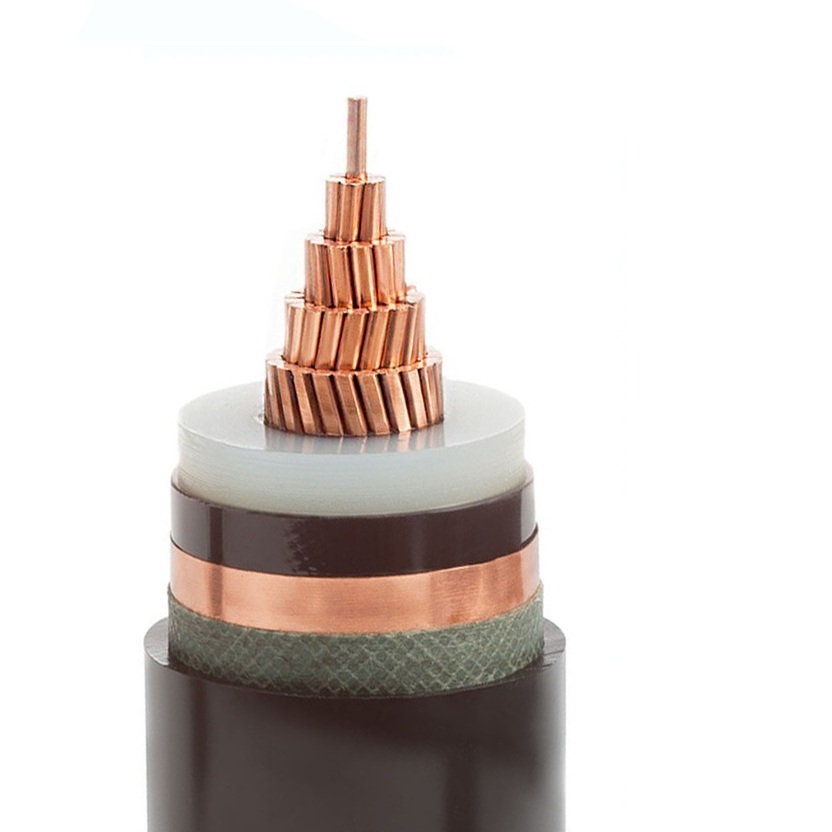
Layered Structure: With a central single wire as the core, layers are spirally wound outwards to form a concentric circle structure. The number of single wires in each layer is fixed (usually 6 more than the inner layers), and adjacent layers have opposite stranding directions (e.g., alternating S-direction and Z-direction).
Stretch Direction Control: Torque is balanced by reverse stranding to prevent overall cable twisting. For example, if the first layer is stranded in the S-direction, the second layer must be stranded in the Z-direction, and so on.
Typical Applications: Power cable conductors (e.g., copper/aluminum stranded wire), medium-voltage cable cabling, submarine cable armoring, etc.
Bundle Stranding
Irregular Structure: Multiple single wires are stranded simultaneously in the same stranding direction (e.g., all S-direction or all Z-direction). The position of the single wires is not fixed, and the outer layer is prone to irregular shapes.
Single Stranding Direction: All single wires are stranded in the same direction, with no reverse balancing design.
Typical Applications: Flexible cables requiring high flexibility, mobile device connection cables, etc.

2. Performance Comparison: Stability vs. Flexibility
Concentric Stranding (Regular Stranding)
Strong Mechanical Stability:
Torque Balance: Adjacent layers are stranded in opposite directions to create a "helical meshing effect," similar to helical gear meshing, increasing interlayer friction by 3-5 times, effectively resisting interlayer slippage during bending.
Radial Pressure Resistance: Outer single wires are embedded in inner layer valleys, forming a "self-tightening close-packed" structure with a fill factor of over 0.9 (compared to only 0.75 for co-directional stranding), capable of withstanding 10MPa radial pressure.
Superior Electrical Performance:
Electric Field Homogenization: Outer single wires fill inner layer valleys, conductor surface tolerance is controlled within ±0.1mm (±0.3mm for co-directional stranding), reducing local electric field strength by 27%.
Impedance Stability: Helix angle deviation is controlled within ±0.5°, reducing inductance fluctuation to below 1% (5%-8% for co-directional stranding).
Stranded Cables
Excellent Flexibility:
Free Slippage Between Individual Wires: Large slippage allowance between individual wires during bending, low bending resistance, suitable for frequent movement scenarios.
Long Bending Fatigue Life: Reverse-stranded cables show no interlayer cracking after 1000 bends at ±90°, while co-stranded cables break after only 300 bends.
Lower Mechanical Strength:
Easy Interlayer Separation: Without the interlocking force of reverse stranding, steel strips are prone to slippage or armor layer loosening during bending.
Weak Radial Pressure Resistance: Low filler coefficient, high risk of radial deformation.
3. Application Scenarios: Fixed Installation vs. Mobile Scenarios
Concentric Stranded Cables (Regular Stranding)
Fixed Installation Cables: Such as building wiring and underground power transmission lines, requiring long-term resistance to radial pressure and mechanical stress.
High Voltage Cables: 110kV and above XLPE cables use reverse stranding, reducing partial discharge from 5pC to below 1pC, meeting stringent insulation requirements.
Submarine Cables: Armored with reverse-stranded steel wire/tape to resist water pressure and ocean currents.
Stranded Cables: Mobile Equipment Cables: Such as robot arm connection cables and stage lighting cables, requiring frequent bending and flexibility.
Flexible Cables and Wires: According to GB/T 3956 standard, types 5 and 6 stranded conductors are used in this application, with type 6 being more flexible than type 5.
Temporary Wiring: Such as exhibition equipment connection cables, requiring quick installation and disassembly.
4. Design Principles: Torque Balance vs. Bending Optimization
Concentric Stranding (Regular Stranding)
Torque Cancellation Mechanism: By controlling the helix angle (θ₁=θ₂) and pitch (L₁=L₂) of adjacent layers, the torque magnitudes are equal and the directions are opposite, achieving a total torque cancellation rate of over 90%.
Electric Field Optimization: Outer monofilaments are embedded in inner layer valleys, eliminating "spiky protrusions," reducing the maximum surface electric field strength by 27%.
Stranding
Optimized Bending Performance: Single wires are stranded in the same direction, allowing free sliding between wires during bending and resulting in low bending resistance.
Material Strength Matching: The outer layer uses high-strength aluminum alloy wire, and the inner layer uses high-toughness copper wire. The maximum stress difference during bending in both directions is controlled within 10%.
Shenzhen Bendakang Cables Holding Co., Ltd. is a leading cable manufacturer specializing in R&D, production, and distribution of electric wires, low-voltage power cables, medium-voltage power cables, and extra-high-voltage power cables (500KV), as well as communication cables. We welcome orders and partnerships from customers worldwide.