
Industrial automation and mechanical equipment rely heavily on stable signal transmission and safe circuit control, making scientific cable selection the core foundation of long-term stable equipment operation. Improper wiring model selection often leads to signal interference, circuit failure, equipment shutdown and increased maintenance costs, which seriously affects the production efficiency of automated production lines. For engineering purchasers, electricians and system integrators, mastering professional selection standards is essential to match different machinery operation scenarios and industrial environment conditions.
A core part of industrial wiring configuration is reasonable Cable Control matching, which focuses on coordinating cable performance, structural parameters and equipment operating rules. Different automated devices such as servo motors, PLC control systems, sensor modules and mechanical transmission structures have completely different requirements for wire bending resistance, insulation performance and anti-interference ability. Static wiring in control cabinets only needs basic insulation and voltage resistance, while dynamic wiring of robotic arms and drag chain equipment must support frequent bending and tensile resistance, which puts forward refined demands for cable selection.
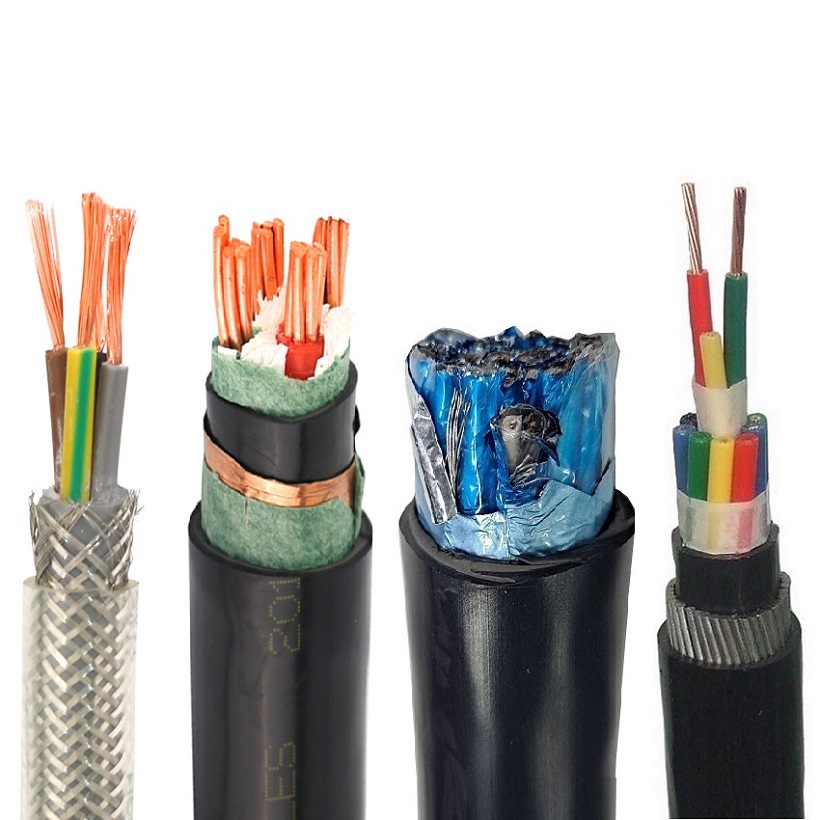
When selecting wiring accessories for low-current signal and auxiliary control circuits, many basic industrial scenarios are more suitable for standardized Control Wire. This type of wire features compact structure, flexible bending and stable conductivity, perfectly adapting to internal wiring of small machinery, terminal connection of control panels and short-distance signal transmission. It is simpler in structure than heavy-duty industrial cables, with lower installation difficulty and cost, and is the preferred wiring solution for conventional non-high-interference automation control circuits.
For medium and large industrial automation production lines and heavy machinery operation systems, professional Control Cable has become the mainstream supporting choice. It adopts multi-layer protective structure, high-purity stranded copper conductors and high-performance PVC or XLPE insulation materials, with excellent anti-aging, oil-resistant and anti-electromagnetic interference capabilities. Shielded models can effectively isolate external current and signal interference, ensuring accurate and real-time transmission of equipment control signals, and greatly improving the stability of automated machinery operation.
Environmental adaptability is a key factor that cannot be ignored in selection. Factory high-temperature operation areas, humid and dusty workshops, and equipment areas with oil pollution and chemical corrosion need to select cables with corresponding special performance. High-flexibility cables are required for frequent reciprocating motion scenarios such as drag chains and mechanical arms to avoid core breakage; fire-resistant and low-smoke halogen-free models are suitable for public industrial buildings and closed automated workshops to meet safety and environmental protection standards.
In addition, parameters such as cable core count, wire gauge and rated voltage must be matched with equipment power and control system specifications. Excessively thin wire gauges will cause overload heating and circuit aging, while redundant core designs will increase installation costs and wiring complexity. Standardized selection can effectively reduce equipment failure rates, extend the service life of automation systems, and help industrial enterprises achieve stable and efficient automated production operations.